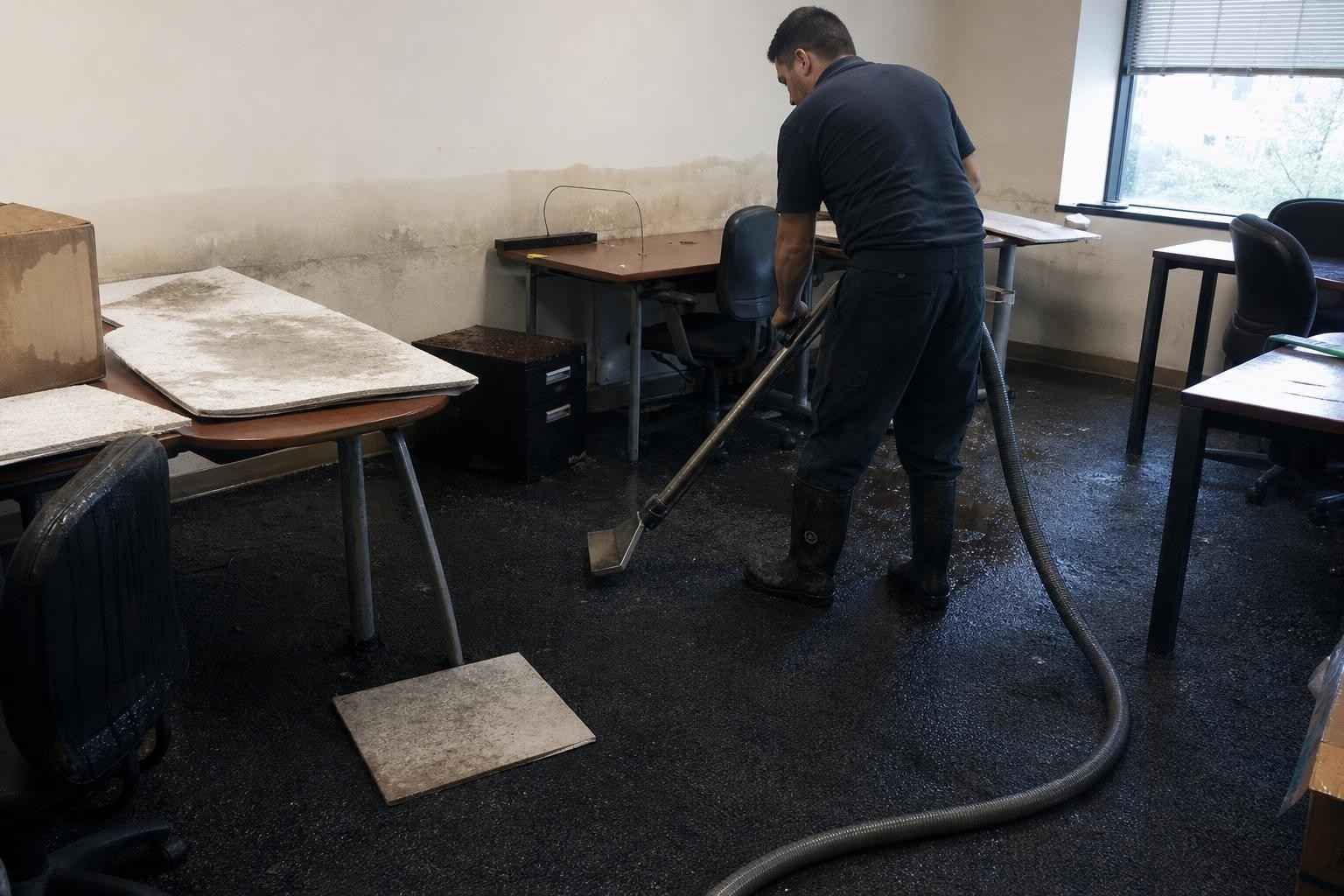
Seagoville's low-lying 75159 area drains slowly, so ponding near the East Fork of the Trinity, slab leaks in Blackland Prairie clay, and burst pipes all leave water sitting. Our crews extract fast and dry the framing until the meter confirms it. Call (469) 804-9910.
Seagoville is covered by our citywide water damage restoration in Dallas, so the same trucks and 24/7 line that work the rest of the metro reach you here.
Water Damage Restoration in Seagoville, TX
By the time most Seagoville families notice the water, it has already spread. A supply line lets go behind the washer while nobody is home, a slab leak that has been corroding for weeks finally surfaces through the tile, or an afternoon storm off U.S. 175 backs runoff up through a floor drain. Water never sits still once it is loose. It follows the baseboards, wicks up into the drywall, and pools in the subfloor cavity where the carpet on top still feels dry. Give it one warm southeast Dallas County afternoon and mold has already found the damp, often inside a single day.
Water Damage Restoration Dallas keeps the Seagoville line open around the clock, weekends and holidays included. Our shop is in Dallas, roughly eleven miles up the highway, close enough that a technician is already heading down U.S. 175 toward you instead of dispatching from across the county line. When you call, a person answers rather than a menu, and the crew shows up ready on the first trip with truck-mounted extraction, commercial drying gear, and the photos and moisture logs your adjuster will want. Dial (469) 804-9910 and you will get an honest read on when we can reach you.
⚠️ Why Seagoville Homes Face Elevated Water Damage Risk
Seagoville sits on the Blackland Prairie, and the dense black clay under this corner of Dallas County shapes most of what we get called out for. That soil balloons after a soaking rain and then draws back tight once a Texas summer bakes it dry, and the back-and-forth keeps steady pressure on the supply lines routed through your slab. It is the main reason slab leaks sit near the top of our Seagoville call log. The town also lies low and drains slowly, with the East Fork of the Trinity River tracing the eastern edge of the 75159 area, so a heavy rain tends to pond and back up instead of running off. Housing spans the whole range too, from decades-old ranch homes on big lots near the old downtown grid to newer builds off Malloy Bridge Road, which leaves pipe ages all over the map. Throw in a hard North Texas freeze that splits an exposed line overnight and a Seagoville homeowner has more than one path to a flooded floor.
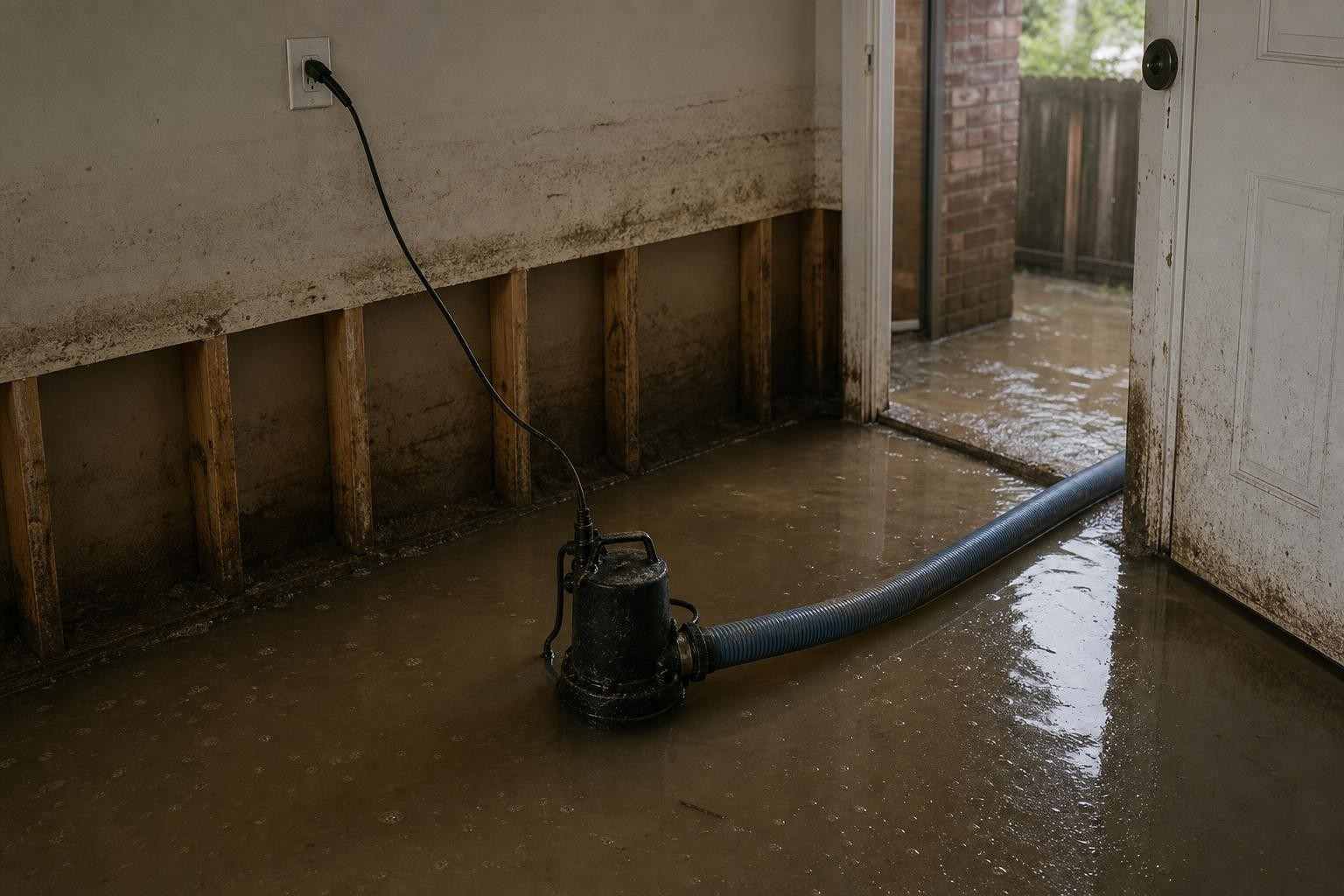
Seagoville's Specific Water Damage Risks
Where the water came from tells us how to attack the job, and in Seagoville it usually traces back to one of a handful of sources. These are the situations that bring us out to town most often:
- Trinity River and stormwater flooding. The East Fork of the Trinity hugs the low eastern side of Seagoville, and stretches of the 75159 area sit near enough to that bottomland to take on water when the river comes up. Since the clay here turns rain away rather than soaking it in, even a single hard downpour can overrun a storm inlet and pool against houses on the low streets. Seagoville runs a Turn Around Don't Drown campaign for precisely this hazard.
- Slab leaks under shifting clay. The expansive Blackland clay beneath Seagoville is forever on the move, and the supply lines cast into your foundation take the punishment. A patch of floor that stays warm underfoot, a water bill that creeps up for no clear reason, or a faint trickle heard only when the house goes quiet usually points to a line that has already failed.
- Aging plumbing in the original streets. Near the old downtown grid and the first neighborhoods, plenty of homes are still running their original supply lines. Years of corrosion eat the pipe wall thin, and a pinhole or a split joint can seep behind drywall for weeks before a stain ever appears.
- Frozen and burst lines. When a hard freeze settles over North Texas the way the February 2021 storm did, the exposed runs in unheated garages, attics, and exterior walls are the first to crack in Seagoville's older housing stock.
- Summer AC condensate spillover. Push an air conditioner through a Seagoville July without a break and a clogged condensate line or a rusted-out drain pan eventually gives way, soaking a ceiling or the closet beneath the air handler before anyone spots it.
- Appliance and water heater failures. A cracked hose behind the washing machine, a weeping dishwasher fitting, or a water heater near the end of its run can spill water for hours while the family is asleep or off at work.
Water Damage Services We Provide in Seagoville
Whatever soaked the floor, the sequence stays steady: lift the water out, clean everything it reached, and dry the structure down to a reading we can put a number on. Here is the full range we run for Seagoville property owners.
Water Extraction
Between truck-mounted vacuum units and submersible pumps, we pull standing water out of a Seagoville home in a sliver of the time any shop vac could touch. Some people call this water mitigation or water cleanup, and it is where every Seagoville water restoration and water damage repair job starts.
Water extraction in Seagoville TX →24/7 Emergency Water Removal
A pipe that fails before sunrise or a slab leak edging across the kitchen will not sit politely until Monday. We pick up any hour and get rolling down U.S. 175 toward Seagoville. We take 24 hour water damage calls across Seagoville, and that 24/7 water damage line never goes to voicemail.
Emergency water removal in Seagoville TX →Flood Damage Restoration
When the East Fork rises or a storm inlet gives out, a flooded home needs full extraction, structural drying, and cleanup. We carry Seagoville flood jobs from soaked back to sound. From flood cleanup through the flood damage repair that follows, we carry a flooded Seagoville home from soaked to sound.
Flood damage restoration in Seagoville TX →Sewage Cleanup & Sanitization
A sewer line that chokes or collapses in one of Seagoville's older downtown homes brings up Category 3 water, a biohazard no mop should touch. We wall it off, remove it, disinfect the space, and clear the odor. Our sewage backup cleanup covers full sewage removal and black water cleanup.
Sewage cleanup in Seagoville TX →Commercial Water Damage
For the storefronts and offices along the U.S. 175 corridor and around downtown Seagoville, we clear the water off your floor and help you keep the lights on.
Commercial water damage in Seagoville TX →Mold Remediation
Where the Blackland clay keeps a Seagoville home damp, mold can take a wall cavity in a day or two. Our TDLR-licensed partners handle containment, removal, and HEPA filtration.
Mold remediation in Seagoville TX →Mold After Water Damage in Seagoville
The slow-draining Blackland ground under Seagoville is what makes mold such a fast follow-on here. When water ponds against a low 75159 house and the clay refuses to let it soak away, that standing moisture lingers exactly where mold wants it, and a southeast Dallas County summer supplies the warmth to finish the job. A colony can be growing within a day or two of the leak, tucked behind drywall or under flooring where a musty smell tips you off before anything shows. Vacuuming up the standing water is the opening move only. Cut the drying short and the damp stays sealed in the cavity, chewing on the framing.
So on a Seagoville job drying is its own stage, never an afterthought. Air movers and dehumidifiers hold on the structure, then we circle back with moisture meters and thermal imaging to confirm the hidden pockets have truly dried, not just the surface a hand can feel. Should mold already have a foothold, our mold remediation partners take over the removal and treatment.
Mold remediation and removal services are performed by or in partnership with a TDLR-licensed Mold Remediation Contractor. We do not perform mold testing, inspection, or assessment, remediation and removal only.
Neighborhoods & ZIP Codes We Serve in Seagoville
We take water damage calls across all of Seagoville TX, from the old grid around downtown out to the newer subdivisions off Malloy Bridge Road and down toward the Trinity River bottomlands. Seagoville sits inside a single ZIP code, 75159, which spills over into a few neighboring communities as well.
Seagoville TX Areas We Cover
Seagoville TX ZIP Code
We also serve neighboring Balch Springs, Mesquite, Combine, Crandall, and Wilmer. View all service areas →
Official Seagoville TX Resources