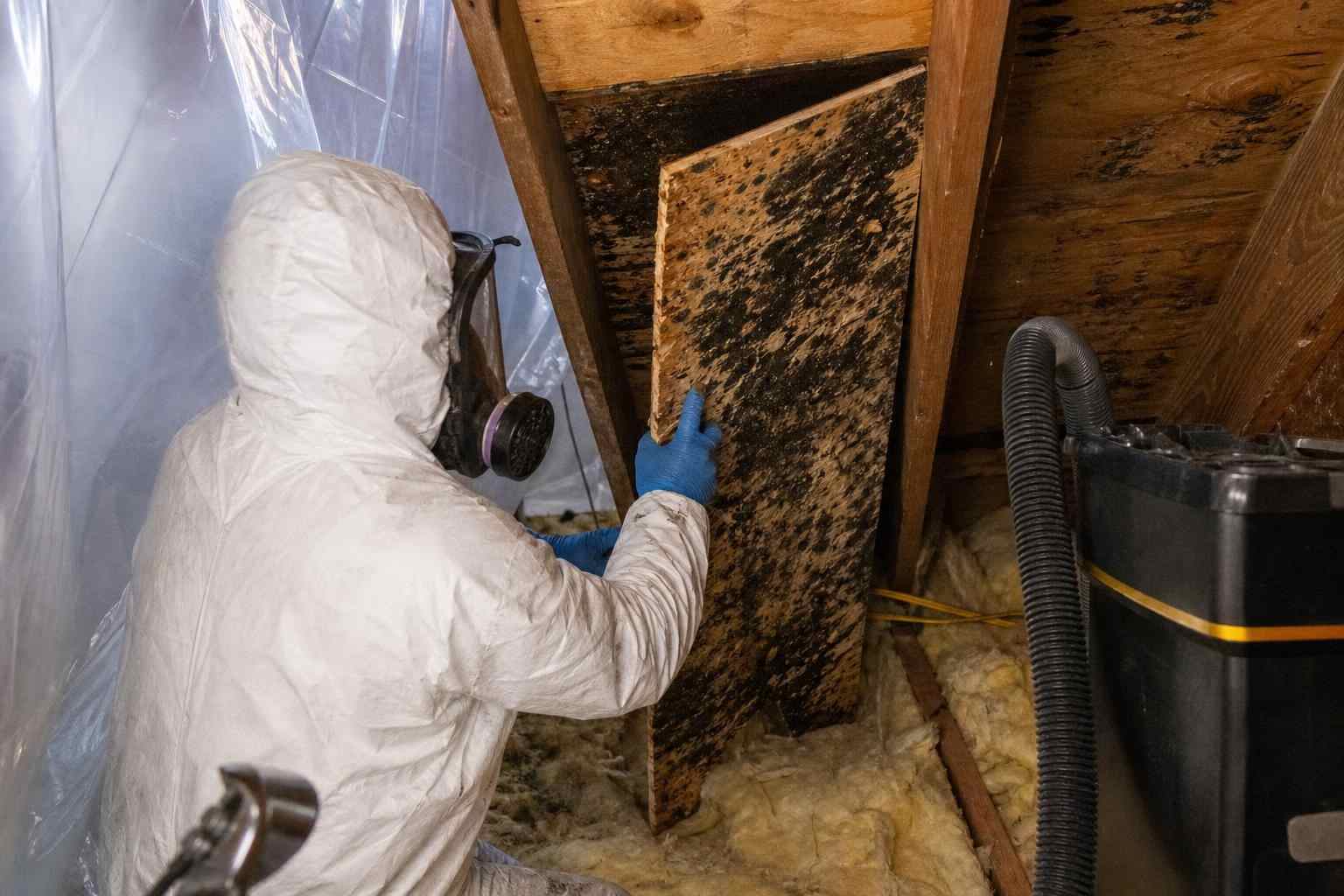
Homeowners insurance, also called home insurance, covers mold remediation only when the mold grew from a covered, sudden peril, like a burst pipe or appliance failure, and you dried the home promptly. It usually pays up to a low mold sub-limit. Mold from a slow leak, ongoing humidity, or neglect is treated as gradual damage and generally excluded.
The Short Answer
Homeowners insurance covers mold remediation only in a fairly narrow window: when the mold grew as a direct result of a covered, sudden peril and you moved quickly to dry things out. If a pipe bursts, your washing machine hose fails, or a storm suddenly opens the roof, and mold follows before you can fully dry the home, your policy will often help pay to remove it, though usually up to a limited dollar amount.
What insurance almost never covers is mold that grew from a slow, ignored leak, ongoing humidity, or plain neglect. In that case the insurer treats the mold the same way it treats any gradual damage: as something you could have prevented, and therefore not their responsibility. So the real question is never just "does insurance cover mold." It is "what let the moisture in, and how fast did you respond."
The Covered-Peril Rule
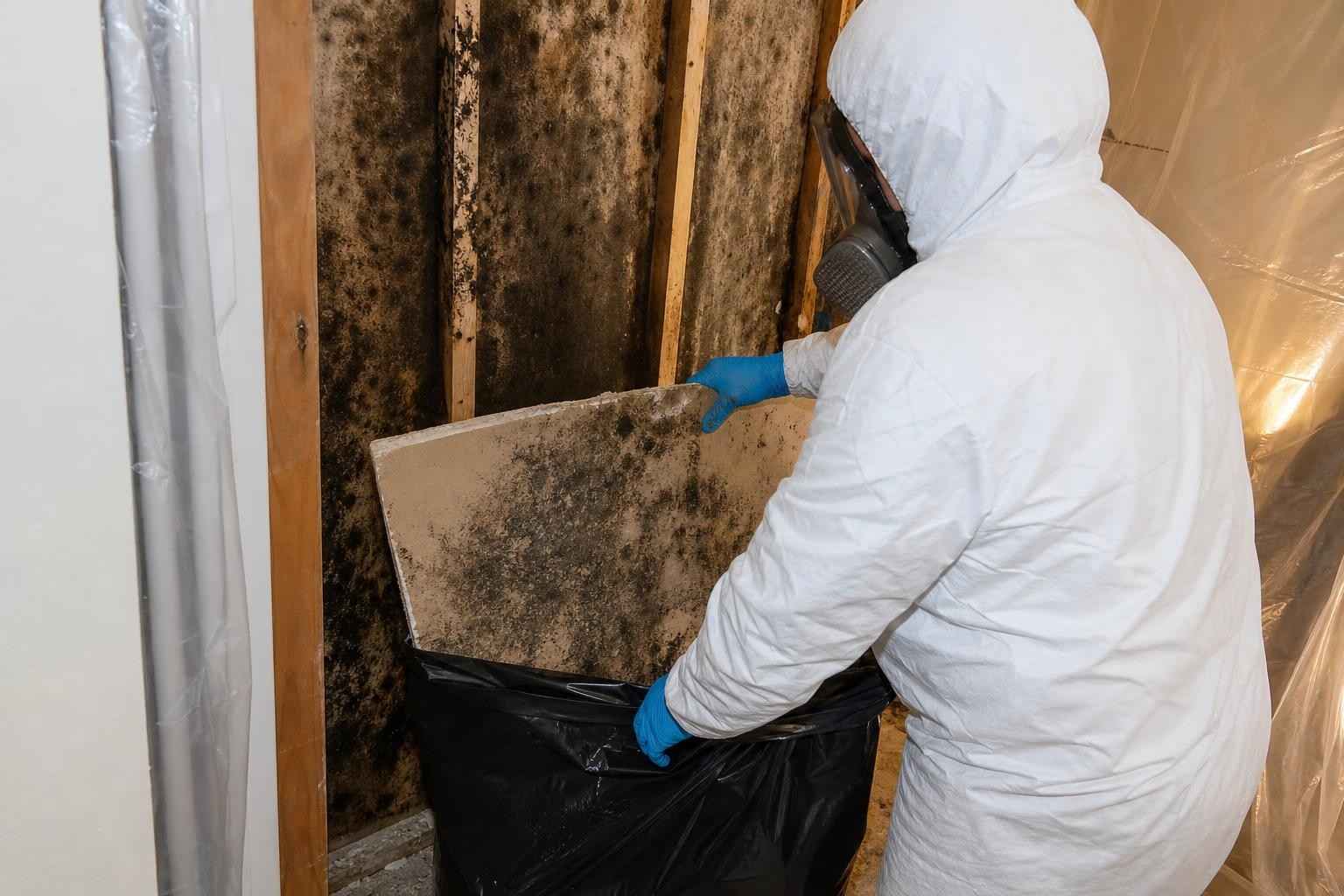
Mold is almost never treated as its own event by an insurer. It is treated as a consequence. The policy asks a simple question first: was the mold caused by a peril the policy already covers? If the answer is yes, the mold cleanup can ride along with that covered claim. If the answer is no, the mold is on you.
That is why a burst pipe and a slow drip can lead to completely different outcomes even when the mold looks identical. The burst pipe is a sudden, covered peril, so the mold that follows is tied to a covered loss. The slow drip is gradual damage, excluded from the start, so the mold it caused is excluded too. The mold inherits the coverage of whatever created the water.
💡 Mold Follows the Water Claim
Insurers do not usually decide mold coverage on its own. They decide whether the water event that caused it was covered, and the mold follows that ruling. Fix the water source and the mold stops spreading, which is the same thing that keeps your claim clean. Speed on the water is speed on the mold.
When Mold Remediation Is Covered
Mold cleanup generally has a path to coverage when it results from a sudden, accidental, covered water loss and you acted promptly. Common examples include:
- A burst or frozen pipe. A pipe that suddenly ruptures, including one that freezes and splits in a Texas cold snap, is a classic covered peril, so mold that grows before you finish drying can be covered too.
- An appliance or water heater failure. A washing machine hose that lets go, a dishwasher that leaks, or a water heater that suddenly fails and soaks the room.
- A sudden plumbing-line break. A supply line or fitting that breaks without warning, as opposed to a seep you left alone.
- Storm water through a sudden opening. If wind or hail tears open the roof and rain pours in, the resulting interior damage, and mold that follows quickly, is generally treated as covered storm damage.
In every case the thread is the same: something broke abruptly, and you responded fast. That is the story a policy is built to cover, and the mold cleanup gets to follow it.
When Mold Is Not Covered
The exclusions come back to time and maintenance almost every time. Standard policies typically will not pay for mold that grew from:
- A gradual or long-term leak. A slow drip behind a wall or under a sink that quietly fed mold over weeks or months.
- Ongoing humidity. A consistently damp bathroom, crawl space, or attic where mold built up over time rather than from a single event.
- Lack of maintenance or neglect. Damage the insurer decides you could have prevented with reasonable upkeep, like a worn fitting you never replaced.
- Flooding from outside the home. Rising water is excluded from every standard policy, so mold that follows a flood is excluded too, unless you carry separate flood coverage.
This is why two homes with the exact same moldy wall can get opposite answers. One had a sudden pipe burst, the other had a leak that sat for months. The mold looks the same. The coverage does not.
⚠️ Neglect Voids the Coverage
Even after a covered water event, an insurer can deny the mold portion if it decides you let the home sit wet and did nothing. Your policy expects you to take reasonable steps to stop the damage from spreading, which is your duty to mitigate. Documenting the loss and drying fast is what keeps a covered claim from being reclassified as neglect.
How Much Will Insurance Pay? The Mold Cap
Here is the part that surprises people. Even when mold remediation is covered, most policies cap how much they will pay for it with a separate mold sub-limit, and that limit is often low relative to what a serious mold job can cost. Depending on the policy, the mold sub-limit might be a few thousand dollars, well under the coverage you carry for the dwelling itself.
That cap exists because insurers treat mold as a high-risk, open-ended cost, so they box it in. It means that even a legitimately covered mold claim can leave you paying the difference once remediation runs past the sub-limit. This is exactly why speed matters twice over: drying fast can keep a mold problem small enough to stay under the cap, instead of ballooning past it. If mold has already taken hold, our mold remediation and black mold removal pages are the place to start.
Mold remediation services are performed by or in partnership with a TDLR-licensed Mold Remediation Contractor. We do not perform mold testing, inspection, or assessment.
Can You Buy Higher Mold Coverage?
Often, yes. Many insurers let you raise your mold coverage above the standard sub-limit by adding a mold endorsement, sometimes called a mold rider or buy-back, to your policy. For a modest additional premium, it lifts the cap on what the insurer will pay for mold remediation tied to a covered loss.
If you live in a humid climate, have had a water problem before, or simply want the cushion, a mold endorsement is worth pricing out with your agent before you ever need it. The base policy's low mold cap is easy to overlook until a claim runs past it, and by then it is too late to add. Ask what your current mold sub-limit is and what it would cost to raise it.
✅ Ask Your Agent Two Questions
Before the next storm season, ask your agent: what is my mold sub-limit, and can I add a mold endorsement to raise it? Those two answers tell you almost everything about how exposed you are. It is a five-minute call that can save you thousands if mold ever follows a covered leak.
Mold From a Flood Is Different
This is the gap that catches Dallas homeowners off guard. Homeowners insurance does not cover flooding, and it does not cover the mold that flooding leaves behind either. If water rises from outside the home, whether from a swollen creek, a flash flood, or storm runoff, a standard policy will not touch the damage or the mold that follows.
To be covered for flood mold, you need a separate flood policy, and even then, mold coverage under flood insurance has its own limits and conditions. We break down the coverage itself in our guide on what homeowners insurance covers for water damage. When flood water does get in, drying it out fast, starting with water extraction to pull the moisture the mold feeds on, is the single best thing you can do to limit what grows.
How to Protect Your Mold Claim
Whether the mold ends up covered or not, the way you respond in the first day or two shapes the whole outcome:
1. Stop the water and dry fast
Shut off the source, then get the area dried. The EPA guidance is to dry water-damaged areas within 24 to 48 hours and keep indoor humidity below 60 percent. Beat that window and mold often never gets started.
2. Document everything before you clean up
Photograph and video the water and any mold from every angle while it is still fresh. This record is what shows the loss was sudden and that you acted, not that you let it sit.
3. Fix the moisture source
Mold is a symptom. If you do not fix the leak, the humidity, or the drainage feeding it, the mold comes back no matter how well it was cleaned. The moisture-source rule is simple: fix the water and the mold stops.
4. Route remediation to a licensed pro
In Texas, mold work is regulated. Under the Texas Mold Assessment and Remediation Rules, remediation of more than 25 contiguous square feet must be done by a TDLR-licensed mold remediation contractor, and the party who assesses the mold and the party who remediates it have to be different licensed parties. Our Dallas crews handle the water damage and structural drying that feed the mold, then connect you with licensed remediation partners for the mold itself. For attic and hidden growth, start with our attic mold removal page, or read our companion guide on what to do about black mold.
Mold remediation services are performed by or in partnership with a TDLR-licensed Mold Remediation Contractor. We do not perform mold testing, inspection, or assessment.