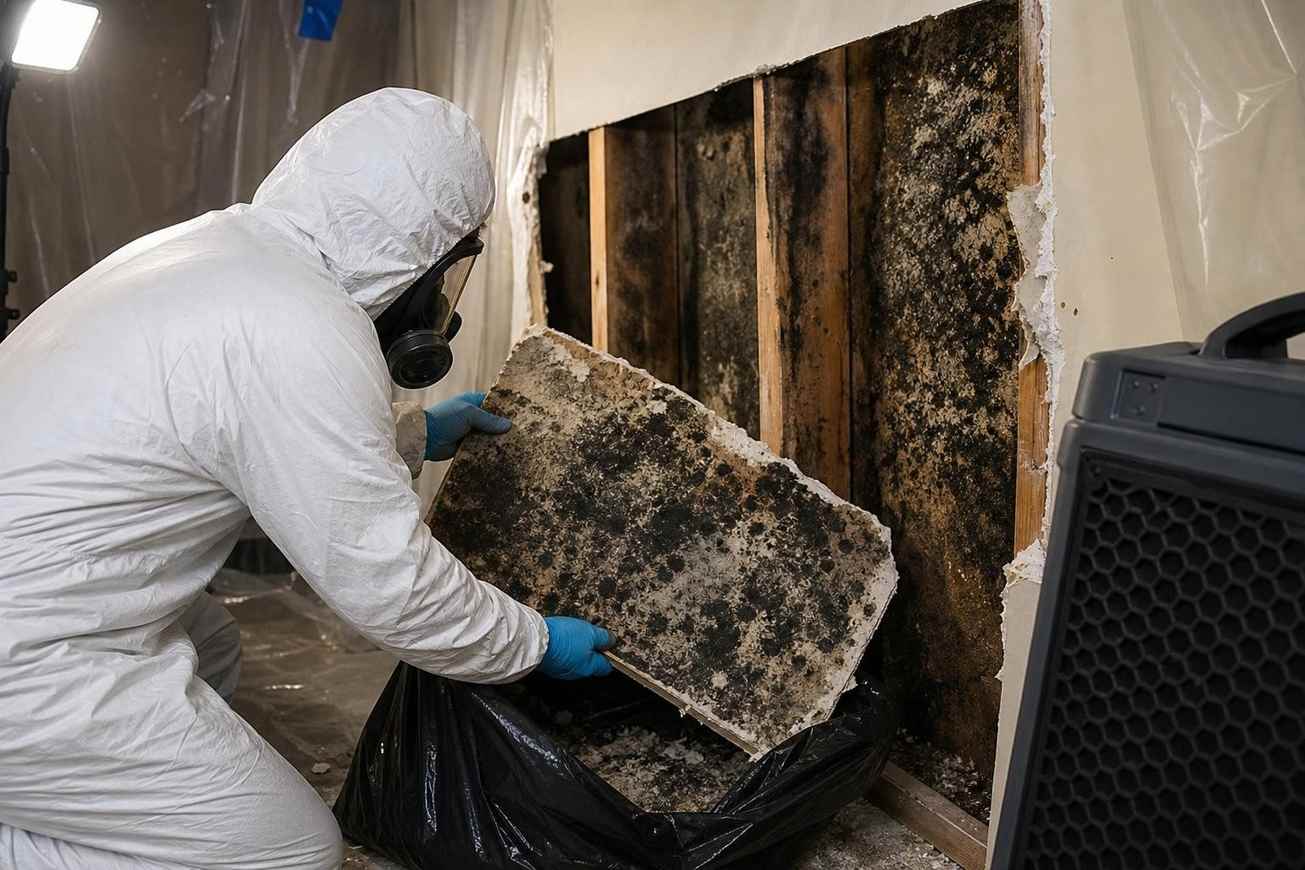
If you find black mold, do not disturb or scrub it, because that releases spores and raises your exposure. Find and stop the moisture source, then close the door and shut off the HVAC to that room. Per EPA guidance, a healthy person can clean a patch under 10 square feet on a hard surface. Over 25 contiguous square feet needs a TDLR-licensed remediator.
The First Move: Do Not Disturb It
If you take one thing from this article, take this: when you find black mold, your first job is to leave it alone. Do not scrub it aggressively, blast it with a leaf blower, wipe it hard with a dry rag, or knock the wall it is on. Mold spreads by releasing spores, and disturbing a patch is the single fastest way to send a cloud of those spores into the air and all over the rest of your home.
A calm, deliberate response beats a panicked one every time. Black mold is a problem to fix, not a fire to stamp out this second. If you are worried about the health side of it, our guide on whether black mold is dangerous walks through what it can and cannot do. Close the door to the room if you can, keep kids and pets out, and take a few minutes to work through the steps below in order. The mold has probably been there a while already; another hour spent doing this right will not hurt you, but rushing it can make the whole thing worse.
⚠️ What Not to Do
These common reactions do more harm than good:
- Do not dry-brush, sand, or aggressively scrub the mold. That launches spores into the air.
- Do not point a fan directly at it to "dry it out." You are just spreading it faster.
- Do not paint or caulk over it. It keeps growing underneath and comes right back.
- Do not ignore the smell. A musty odor with no visible mold usually means it is hiding in the wall or ceiling.
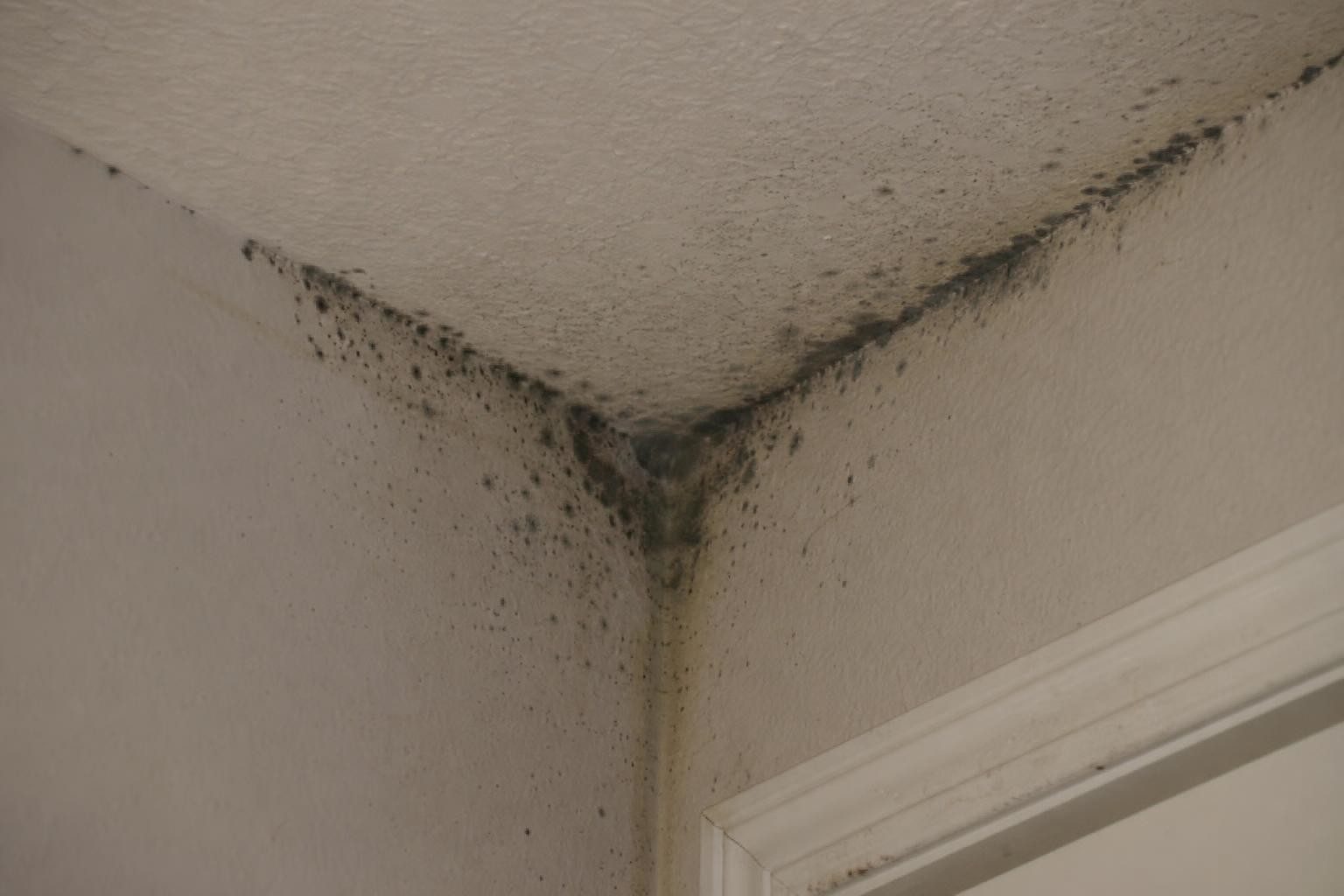
Find and Stop the Moisture Source
Mold does not appear out of nowhere. It follows water, every single time. So before you clean anything, become a detective and find the moisture that is feeding it. Mold cannot survive on a dry surface, which means if you remove the mold but leave the leak, it will be back within days.
In Dallas homes, the usual suspects are a slab leak under the foundation, an AC condensate line overflowing in the summer heat, a roof leak that shows up after a storm, a burst or dripping pipe inside a wall, or a room that flooded and never fully dried out. Follow the dampness to its source. If the mold is under a sink, check the supply lines and drain. If it is on a ceiling, look up for a roof or plumbing leak from above. Stop that water, and you have cut off the mold's food supply.
💡 Mold Is the Second Problem, Not the First
Water is always the first problem, and mold is what shows up when the water sits too long. That is why our crews treat the two together: we find and stop the moisture, dry the structure out properly, then deal with the mold. If you skip the water part, you are just scheduling the mold's return. This is exactly what our water extraction team is built to handle.
Isolate the Area and Limit Airflow
Once the water is stopped, your goal is to keep the mold contained to the room it is already in. The whole game is preventing spores from traveling to clean parts of the house. Shut the door to the affected room. Turn off any central heating or AC that pulls air through that space, because your HVAC system can carry spores through every duct in the house. Close the supply and return vents in that room if you can.
This is the opposite of what most people instinctively do. The instinct is to "air it out" by opening windows and running fans, but that stirs spores up and moves them around. Instead, keep the area still and sealed off while you decide whether this is a job you can handle or one that needs a pro. If anyone in the home has asthma, allergies, or a weakened immune system, keep them out of the room entirely.
When You Can Handle a Small Patch Yourself
Not every spot of mold needs a professional. According to the EPA, a healthy person can usually clean up a small patch of mold themselves, as long as it meets a few conditions:
- It is under about 10 square feet. Roughly a three foot by three foot area or smaller. Anything bigger, step back and call a pro.
- It is on a hard, non-porous surface. Think tile, glass, metal, or sealed countertops, where the mold sits on top rather than growing into the material.
- Nobody in the home is high-risk. If someone has asthma, a mold allergy, or a compromised immune system, let a professional handle it.
If it clears all three, you can do it yourself. Wear an N95 mask and rubber gloves, and open a window to that specific room for ventilation only after you have contained the airflow from the rest of the house. Scrub the hard surface with detergent and water, then dry it completely, because leftover moisture invites the mold right back. Bag up any rags or sponges and throw them away when you are done.
✅ Protect Yourself Before You Start
Even for a small DIY job, wear a mask and gloves, and consider goggles without vent holes. Skin and eye contact and breathing in spores are what cause the irritation people worry about. When you are finished, wash the clothes you wore separately and shower. It is a small patch, so treat it seriously but not fearfully.
Throw Out What Soaked It Up
Here is the part that surprises people. You cannot always clean mold off; sometimes you have to throw the material out. Hard surfaces can be scrubbed and saved, but porous materials that soaked up the moisture, like drywall, carpet, carpet padding, ceiling tiles, and insulation, usually have to be removed and discarded. The mold grows down into the fibers where no amount of scrubbing can reach it.
Trying to salvage soaked drywall or carpet is a false economy. It looks clean on the surface, but the mold is still alive inside, and it will bloom again the moment conditions are right. When you cut out and bag contaminated porous material, wrap it in plastic before you carry it through the house so spores do not shed along the way. This is one of the biggest reasons larger mold jobs belong with a professional: knowing what can be saved and what has to go, and removing it without contaminating everything else.
When to Call a Professional
DIY has clear limits, and pushing past them usually makes the problem bigger and more expensive. Call a professional if any of the following is true:
- The growth is larger than about 10 square feet, or it keeps coming back after you clean it.
- The mold is inside walls, under floors, or in your HVAC system, where you cannot fully see or reach it.
- It followed a major water event, like a flood, a burst pipe, or a sewage backup, which means far more moisture soaked in than you can see.
- Anyone in the home is high-risk, including infants, older adults, and people with asthma or a weakened immune system.
- You smell mold but cannot find it. A hidden source needs professional detection.
This is exactly where we come in. Our Dallas crews handle the water damage that feeds the mold, the structural drying, and the moisture source, and we connect you with licensed remediation partners for the mold removal itself. Start with our black mold removal and mold remediation pages, or just call and we will walk you through what you are dealing with.
Mold remediation services are performed by or in partnership with a TDLR-licensed Mold Remediation Contractor. We do not perform mold testing, inspection, or assessment.
What Texas Law Says About Mold Remediation
Texas has specific rules about who can remediate mold, and they are worth knowing before you hire anyone. Under the Texas mold rules enforced by the Texas Department of Licensing and Regulation (TDLR), remediation of more than 25 contiguous square feet of mold must be performed by a licensed Mold Remediation Contractor. On top of that, the person who assesses the mold and the person who remediates it must be two different licensed parties, so there is no conflict of interest.
There is an owner exemption: you are allowed to remediate mold in your own owner-occupied home yourself, at any size, without a license. But the moment you hire a company to handle more than 25 contiguous square feet, that company must be TDLR-licensed. If a contractor offers to do a large mold job and is not licensed, that is a red flag. We connect you with properly licensed remediation partners so the work is done to code, and we handle the water damage and drying side ourselves. Wondering who pays for all this? See our guide on whether insurance covers mold remediation.
Mold remediation services are performed by or in partnership with a TDLR-licensed Mold Remediation Contractor. We do not perform mold testing, inspection, or assessment.