Pipes burst in Texas because homes are built for heat, so plumbing runs through unconditioned attics and uninsulated exterior walls that hit the roughly 20 degree Fahrenheit freezing threshold fast. Water expands as it freezes and pressure builds until the pipe splits, often bursting on the warm-up day. Let faucets drip, keep the heat on, and know your main shutoff to prevent it.
Why Texas Pipes Burst When Other States Shrug It Off
A cold snap that would barely register in Minnesota can wreck plumbing all over North Texas, and the reason comes down to how our homes are built. Texas houses are designed for heat, not hard freezes. Up north, pipes are run deep inside heated, insulated walls because builders assume it will get brutally cold every winter. Here, that assumption never got made.
So in a typical Dallas home, pipes often run through unconditioned attics, through exterior walls with little or no insulation, and along the outside of the house where they are exposed to the wind. On a mild winter that is fine. But when a real freeze arrives, all of those unprotected pipes are sitting ducks, and because so many homes share the same weakness, a single cold snap can burst pipes across an entire neighborhood at once. Winter Storm Uri in February 2021 was the brutal example: it did not just freeze pipes, it froze them everywhere, all at the same time.
The Physics: Why a Frozen Pipe Actually Bursts
Most people assume the ice itself splits the pipe by pushing outward, and that seems logical. It is also not quite what happens. The real culprit is pressure.
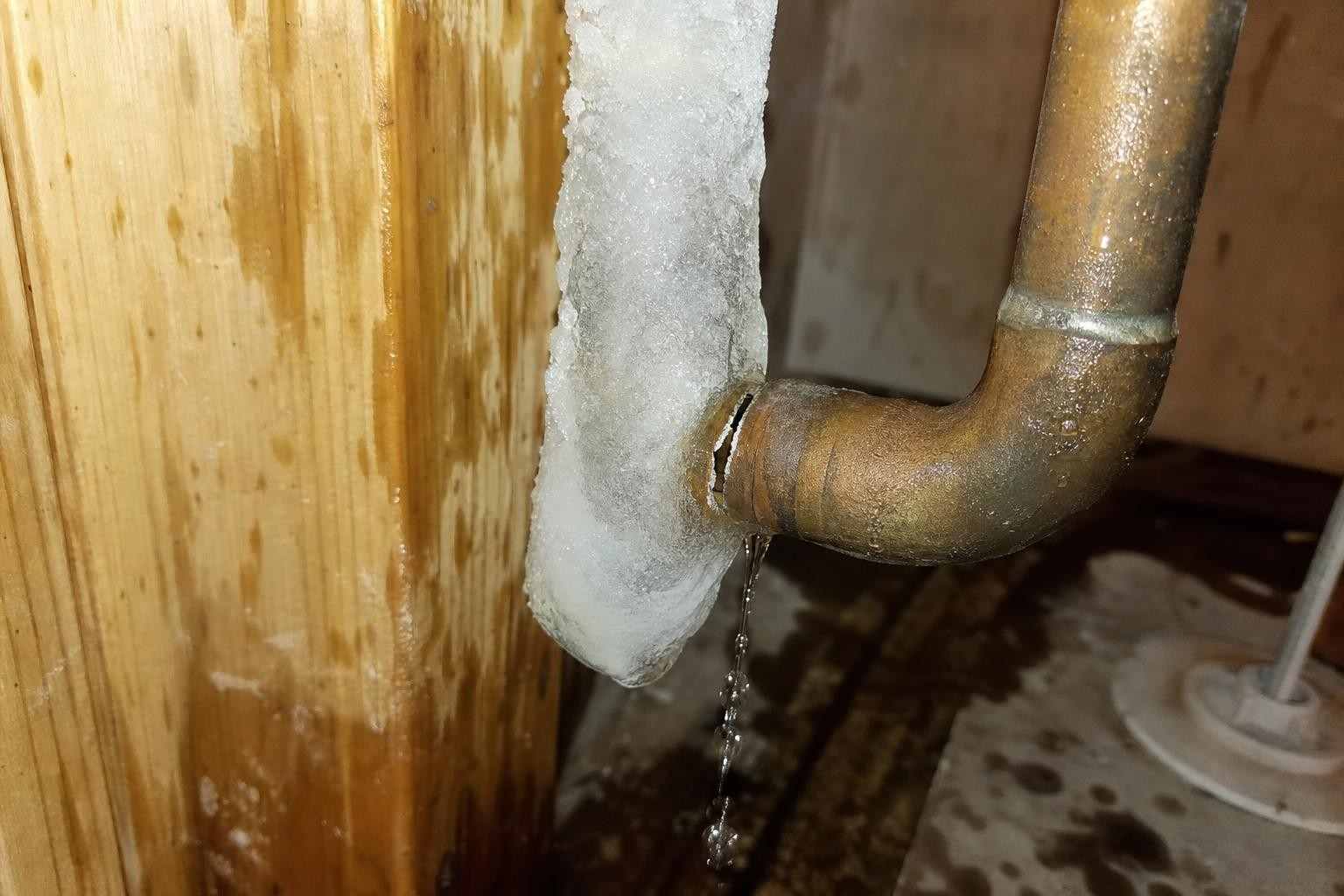
Water is unusual: it expands as it freezes. When a section of pipe freezes solid, that ice plug seals off the line. As more water behind it keeps freezing and expanding, it has nowhere to go, so pressure starts building in the trapped water between the ice plug and the nearest closed faucet. That pressure climbs and climbs until it exceeds what the pipe can hold, and the pipe ruptures, often at a weak point that may be nowhere near the actual ice.
💡 The Cruel Twist: It Often Leaks Only When It Thaws
Here is what catches people off guard. While the pipe is frozen, the ice plug is also acting like a cork, so you may not see a single drop of water. The pipe can already be cracked and you would never know. Then the temperature climbs, the ice melts, the cork is gone, and water pours out of the split all at once. This is why so many Texas homeowners discover a burst pipe on the warm-up day after a freeze, not during the cold itself.
At What Temperature Do Pipes Freeze?
The number to remember is 20 degrees Fahrenheit. While water freezes at 32 degrees, pipes usually need the outside temperature to drop to around 20 degrees or below before the water inside them actually freezes, and the risk grows the longer it stays that cold. A quick dip to 25 degrees overnight is far less dangerous than 20 degrees holding for a full day.
That threshold matters more in Texas than almost anywhere, because our exposed pipes hit that danger zone fast. A pipe buried in a heated wall may never get close to 20 degrees. A pipe running through an uninsulated attic or along an exterior wall can drop to the outside air temperature in a matter of hours. When the forecast shows a hard freeze, sustained cold below 20 degrees, or wind chill on top of it, that is your signal to take the prevention steps below seriously.
The Prevention Checklist Before a Freeze
Almost every frozen pipe disaster is preventable, and none of these steps require a plumber or special tools. Run through this list whenever a hard freeze is in the forecast:
- Let your faucets drip. Open the faucets on exterior walls to a slow trickle, both hot and cold. A moving stream of water is much harder to freeze, and a slightly open faucet relieves the pressure that actually bursts the pipe. This is the single most effective thing you can do.
- Open cabinet doors. Open the cabinet doors under sinks, especially on exterior walls in kitchens and bathrooms, so the warm air from your home can reach the pipes hidden behind them.
- Insulate exposed pipes. Wrap any pipes you can reach in attics, garages, and along exterior walls with foam pipe insulation or even towels. Focus on the pipes most exposed to the cold.
- Disconnect garden hoses and cover outdoor spigots. A connected hose traps water in the outdoor faucet, which then freezes back into the wall. Disconnect and drain hoses, and cover each spigot with an inexpensive faucet cover.
- Keep the heat on, even when you are away. Do not turn the heat off to save money during a freeze. Keep the thermostat at 55 degrees or higher, day and night, even if you are traveling. A cold, empty house is where the worst burst pipe stories start.
- Know where your main water shutoff is. Find it now, before an emergency, and make sure everyone in the house knows how to turn it off. If a pipe does burst, shutting off the main in the first minute is the difference between a puddle and a flooded house.
✅ The Drip Trick Really Works
If you only do one thing on this list, let your faucets drip. It works on two fronts at once: moving water resists freezing, and an open faucet gives the water somewhere to go, which releases the pressure buildup that is what actually splits the pipe. It costs a few cents of water and can save you thousands in damage.
What to Do If a Pipe Freezes but Has Not Burst
Suppose you turn on a faucet during a freeze and only a trickle comes out, or nothing at all. That pipe is likely frozen, and you have a narrow window to thaw it safely before it cracks. Here is how to handle it:
- Keep the faucet open. Leave the affected faucet turned on. As the ice melts, the running water helps break up the blockage, and the open faucet relieves pressure.
- Apply gentle heat. Warm the frozen section with a hair dryer, a space heater kept a safe distance away, or towels soaked in hot water. Start near the faucet and work back toward the cold spot. Never use an open flame or a blowtorch, which can damage the pipe and start a fire.
- Find your shutoff, just in case. Have your hand on the main shutoff location before you start, because a frozen pipe may already be cracked and will start leaking the moment it thaws.
- Call a plumber if you cannot reach it. If the frozen section is inside a wall or you cannot locate it, call a licensed plumber rather than tearing into drywall yourself.
⚠️ Watch for the Thaw
Remember that a frozen pipe often only reveals its crack once it warms up. Stay alert during and after a freeze, especially on the warm-up day. Check under sinks, in the attic, and around water-using appliances for the first signs of a leak, and keep your main shutoff location in mind until the freeze has fully passed.
What Happens If It Does Burst
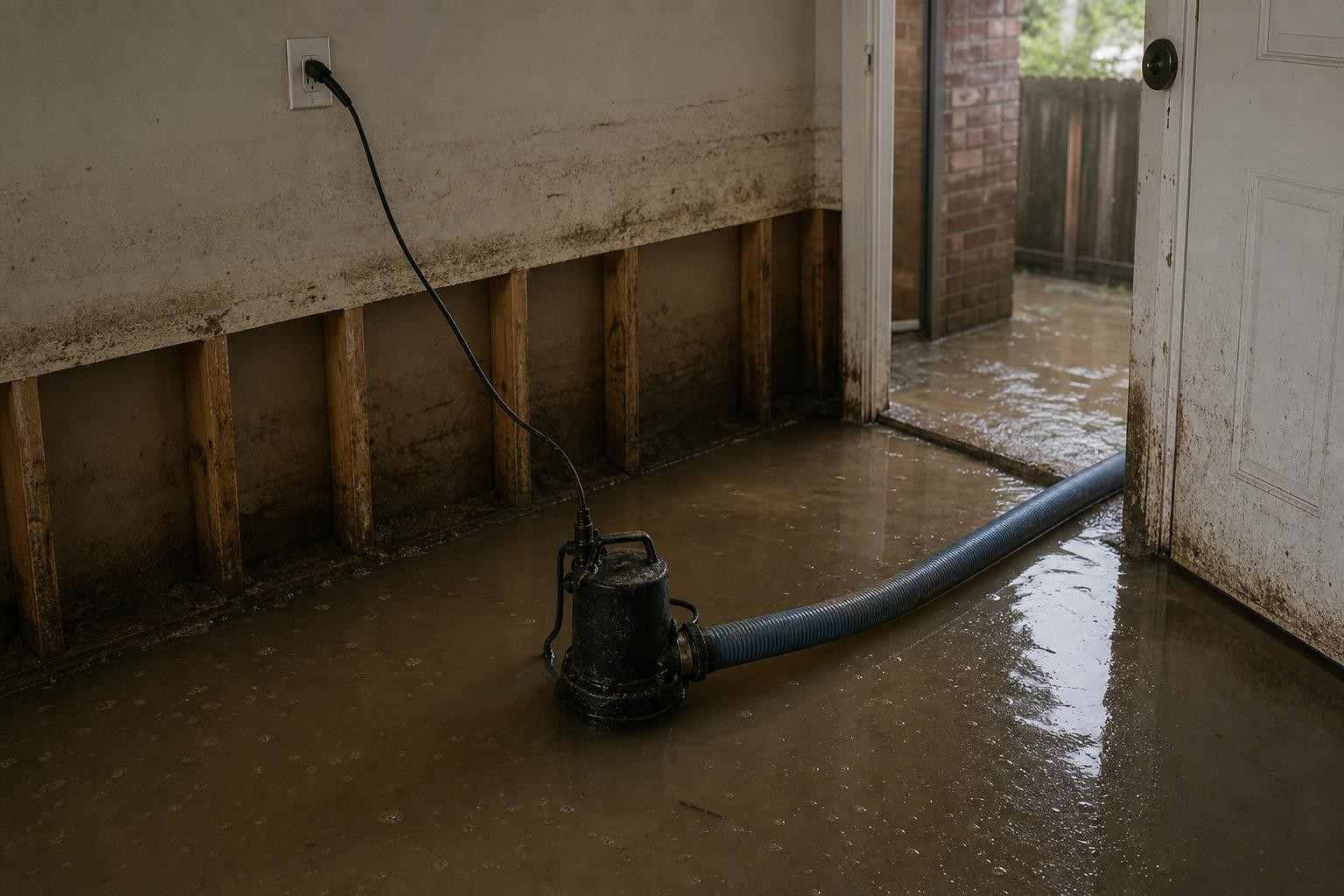
If prevention did not hold and a pipe lets go, speed is everything. Shut off the water at the main immediately, cut the power to any wet area before you step into it, and move belongings out of the water's path. A single burst supply line can put hundreds of gallons into your home in an hour, and it soaks into drywall, flooring, and the wall cavities where you cannot see it.
Because a frozen burst usually happens in an attic or an exterior wall, the water tends to travel down through ceilings and walls before you even notice, which makes fast, professional drying essential. For a full step-by-step on those first crucial minutes, read our guide on what to do when a pipe bursts. When you need water out of the house right away, our emergency water removal and water extraction crews respond around the clock, and if the burst flooded a large area we handle the full flood damage restoration job from extraction through structural drying.
Does Insurance Cover Frozen Pipe Damage?
Here is the good news after all the warnings: a frozen pipe that bursts is generally one of the most clearly covered water losses there is. A standard homeowners policy is built to cover damage that is sudden and accidental, and a pipe that freezes and splits during a cold snap fits that description exactly. The water damage to your floors, walls, and belongings from a burst pipe is typically covered.
There is one important catch. If the insurer decides the burst happened because you left the heat off or ignored an obvious problem, they may argue it was preventable neglect rather than a sudden accident. That is one more reason to keep the heat on during a freeze and to document the damage the moment you find it. For a deeper walkthrough of what is and is not covered, see our guide on whether Texas homeowners insurance covers water damage.