When your home floods, protect people first: cut power to wet areas if you can reach the panel safely, and never enter moving or contaminated water. Once safe, photograph everything, then call your insurer. On a Dallas slab home, external flooding is not covered by standard homeowners insurance. Start extraction fast, since mold begins within 24 to 48 hours.
What Flooding Looks Like in a Dallas Home
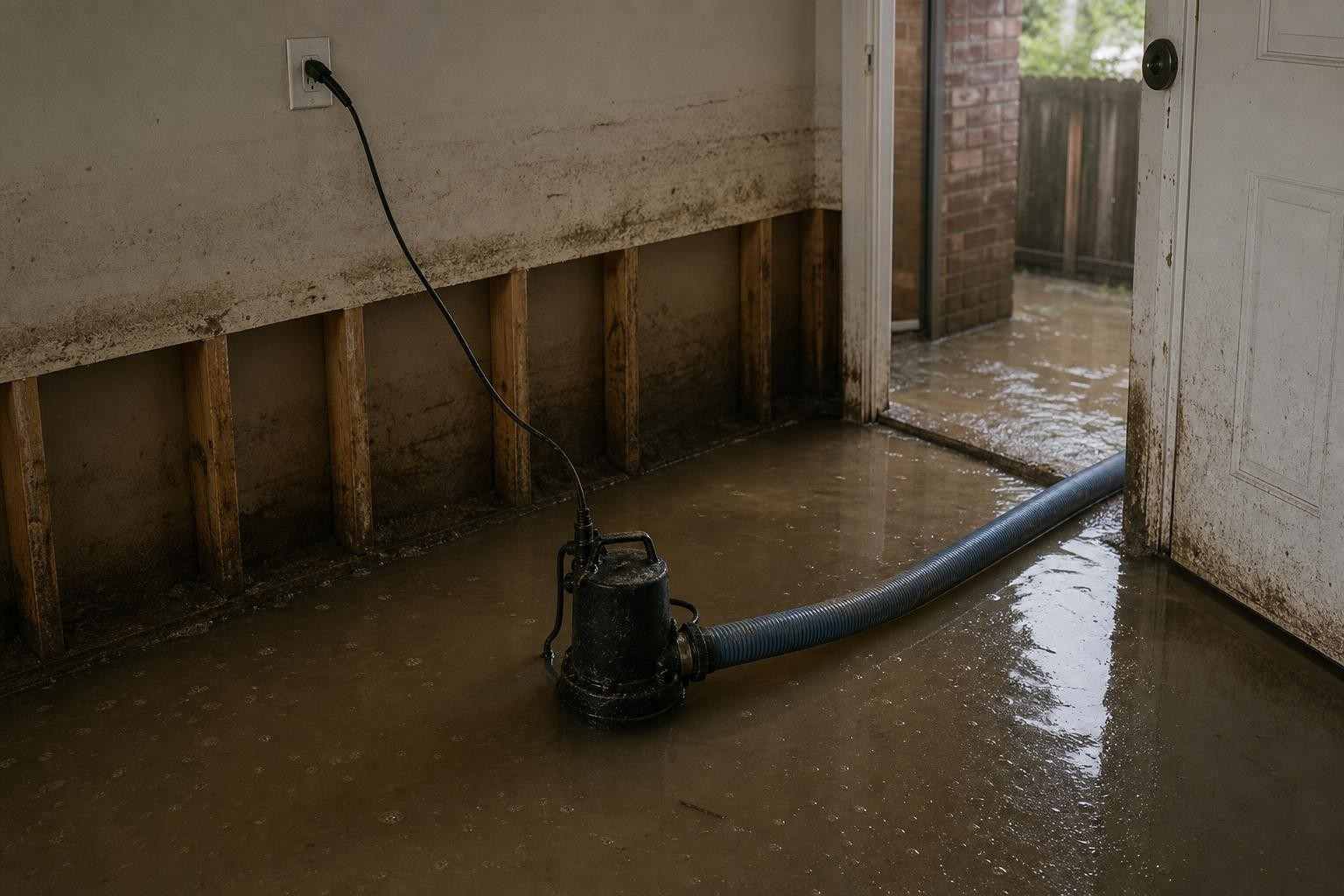
Before anything else, it helps to reset a picture in your head. When people think of a flooded home, they usually imagine a basement filling with water and a sump pump fighting to keep up. That is not the Dallas reality. Homes here are almost all slab-on-grade with no basement, so there is no low level for water to pool in. Flooding shows up instead as first-floor water spreading across your living areas, water pushing in at ground level under doors and through the slab, and rain finding its way in through the roof during a hard storm.
That distinction changes how you respond. You are not bailing out a basement or babysitting a pump. You are protecting the main living level of your home, where your family, your electrical outlets, and everything you own actually are. North Texas is flash-flood country, and these events come on fast, so knowing the steps ahead of time is what keeps a bad night from becoming a disaster.
Step 1: Safety First, Always
Nothing you own is worth getting hurt over. Floodwater is more dangerous than it looks, and the first step is always to protect the people in the home.
- Turn Around, Don't Drown. If water is rising outside or in the street, do not drive or walk into it. Just six inches of moving water can knock an adult off their feet, and a foot of it can float a car. You cannot judge the depth or the current by looking.
- Never enter moving water. Inside or out, if the water is flowing, stay out of it. What looks like a shallow crossing can hide a drop, a current, or debris.
- Cut the power to wet areas. Water and electricity are a deadly mix. If you can safely reach your breaker panel without standing in water, shut off power to the affected areas. If the panel itself is wet or you would have to wade to reach it, do not touch it. Leave and call the utility or an electrician.
- Get out if the structure feels unsafe. If you hear the house shifting, see the ceiling sagging, or the water is rising faster than you can manage, leave and call for help from a safe spot. You can replace a home. You cannot replace the people in it.
⚠️ Treat Every Flood as Contaminated
Water that enters at ground level or backs up from a storm is almost never clean. It can carry sewage, chemicals, and bacteria from the street and soil. Wear boots and gloves if you must be in it, keep children and pets out entirely, and wash thoroughly afterward. This is one more reason to let professionals handle the heavy cleanup.
Step 2: Document Everything Once It Is Safe
Once the people are safe and the immediate danger has passed, and only then, start documenting. Before you move or clean anything, photograph and video the damage from every angle. Capture the standing water, the waterline on the walls, the soaked flooring, and any damaged belongings.
This visual record is the backbone of any insurance claim you file later. It proves what happened and how bad it was, and it protects you if the water recedes before an adjuster ever sees it. Get wide shots of each room and close-ups of specific items, and do not throw anything away yet unless it is a safety hazard.
Step 3: Call Your Insurer (and Know the Key Distinction)
Here is the part that catches Dallas homeowners off guard, and it comes down to how the water got in. There is a critical distinction between two very different situations:
- External flooding, water rising from outside and entering at ground level, is not covered by standard homeowners insurance. Rising water from a storm, a swollen creek, or street runoff is excluded from every standard policy. To be covered for that, you need a separate flood policy. We break down exactly what that policy pays for in our guide on what flood insurance covers.
- An internal flood from a burst pipe or a failed appliance is a different story. Because that kind of water is sudden and accidental, it is generally covered by standard homeowners insurance. If a supply line lets go and water spreads across your first floor, that is the covered kind of loss.
So the same soaked living room can be covered or excluded depending entirely on the source. Call your insurer promptly either way, report the loss, and get a claim number. For the full breakdown of what a standard policy will and will not pay for, see our guide on whether homeowners insurance covers water damage.
💡 Do Not Wait for the Adjuster to Start Drying
Your policy expects you to take reasonable steps to prevent further damage, which is called your duty to mitigate. You are allowed, and expected, to begin extraction and drying before an adjuster arrives. Document first, then get the water out. Waiting days while it sits is how a flood turns into a mold problem.
Step 4: Start Extraction and Drying Fast
Every hour that water sits, it soaks deeper into your flooring, baseboards, drywall, and subfloor. On a slab home, water spreads sideways across the whole first floor and wicks up into the walls, so what looks like a surface puddle is often hiding a much wetter structure underneath.
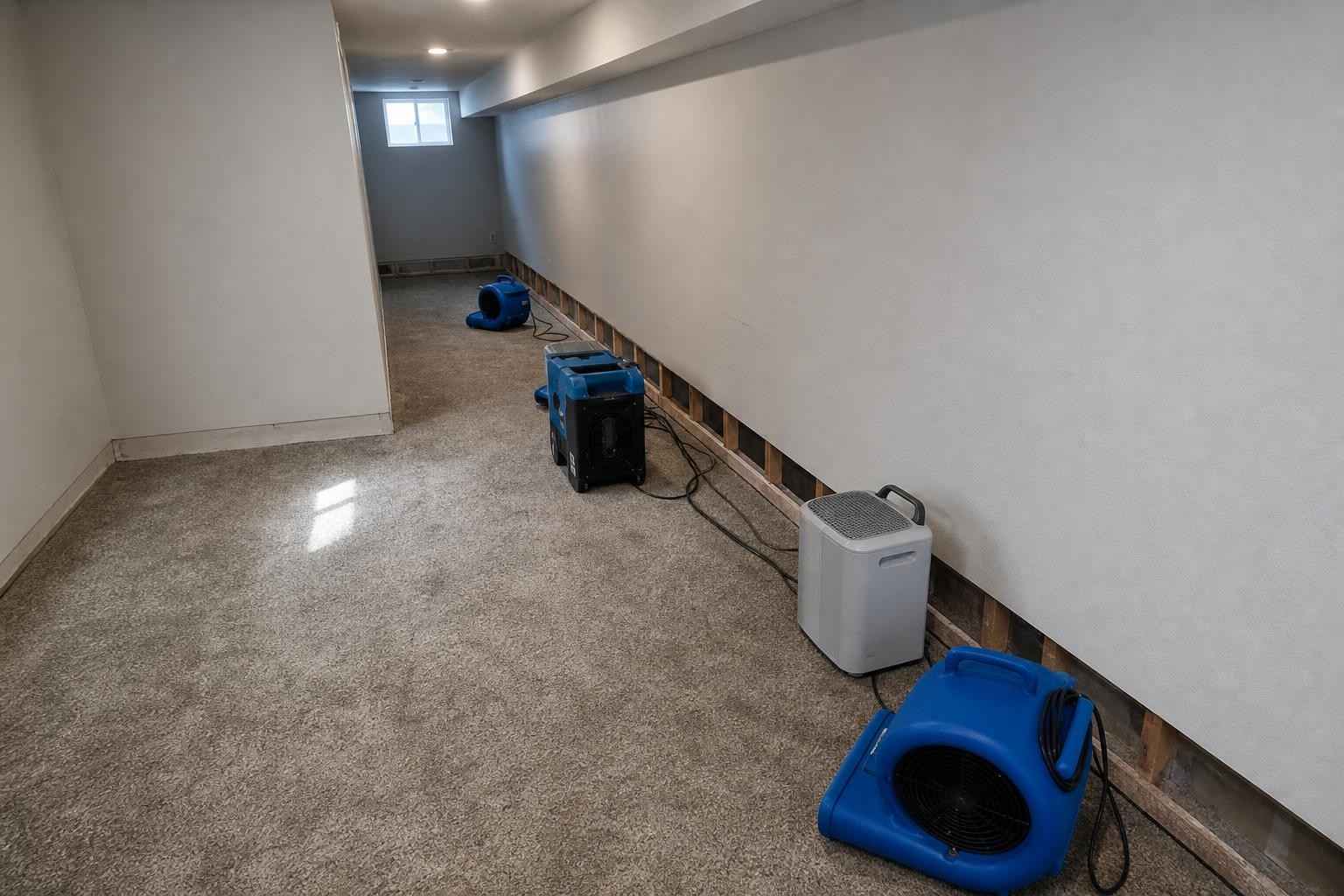
Getting the standing water out quickly is the single biggest thing that limits the damage. Professional crews use truck-mounted extractors, commercial air movers, and dehumidifiers to pull water out of materials you cannot reach with a mop or shop vac. Our water extraction and emergency water removal teams respond around the clock, and because a slab home can hold moisture long after the surface looks dry, they take readings to confirm the structure is actually dry, not just dry to the touch. When a storm has caused broader flooding, our flood damage restoration service handles the full cleanup and drying.
Step 5: Watch for Mold Within 24 to 48 Hours
Mold is the delayed threat that turns a one-time flood into a lingering problem. According to EPA guidance, water-damaged areas should be dried within 24 to 48 hours, because that is the window in which mold begins to take hold. Keeping indoor humidity below 60 percent while you dry out helps too.
This is exactly why speed matters so much. If the structure is dried thoroughly within that first day or two, you give mold no chance to establish. If wet materials sit, especially porous ones like drywall, carpet, and ceiling tile that soaked up the water, mold can appear within days and those materials often have to be removed. Drying fast is not just about saving the floor. It is about not trading a water problem for a mold problem.
A Note on Storm Roof Leaks
Because Dallas flooding often comes with the same storms that batter roofs, water does not always enter at ground level. Hard wind and hail can open the roof and send rain pouring in from above, staining ceilings and running down inside the walls. If you see water coming from the ceiling, keep everyone clear of any sagging or bulging spot, because a water-filled ceiling can collapse, and cut power to nearby light fixtures.
Who you call depends on the source. A roofer fixes the roof opening itself, but the water damage and drying inside the home, the soaked insulation, the stained ceiling, the wet walls, is restoration work. Stopping that interior water fast follows the same rules as any other flood: document it, dry it quickly, and watch for mold.