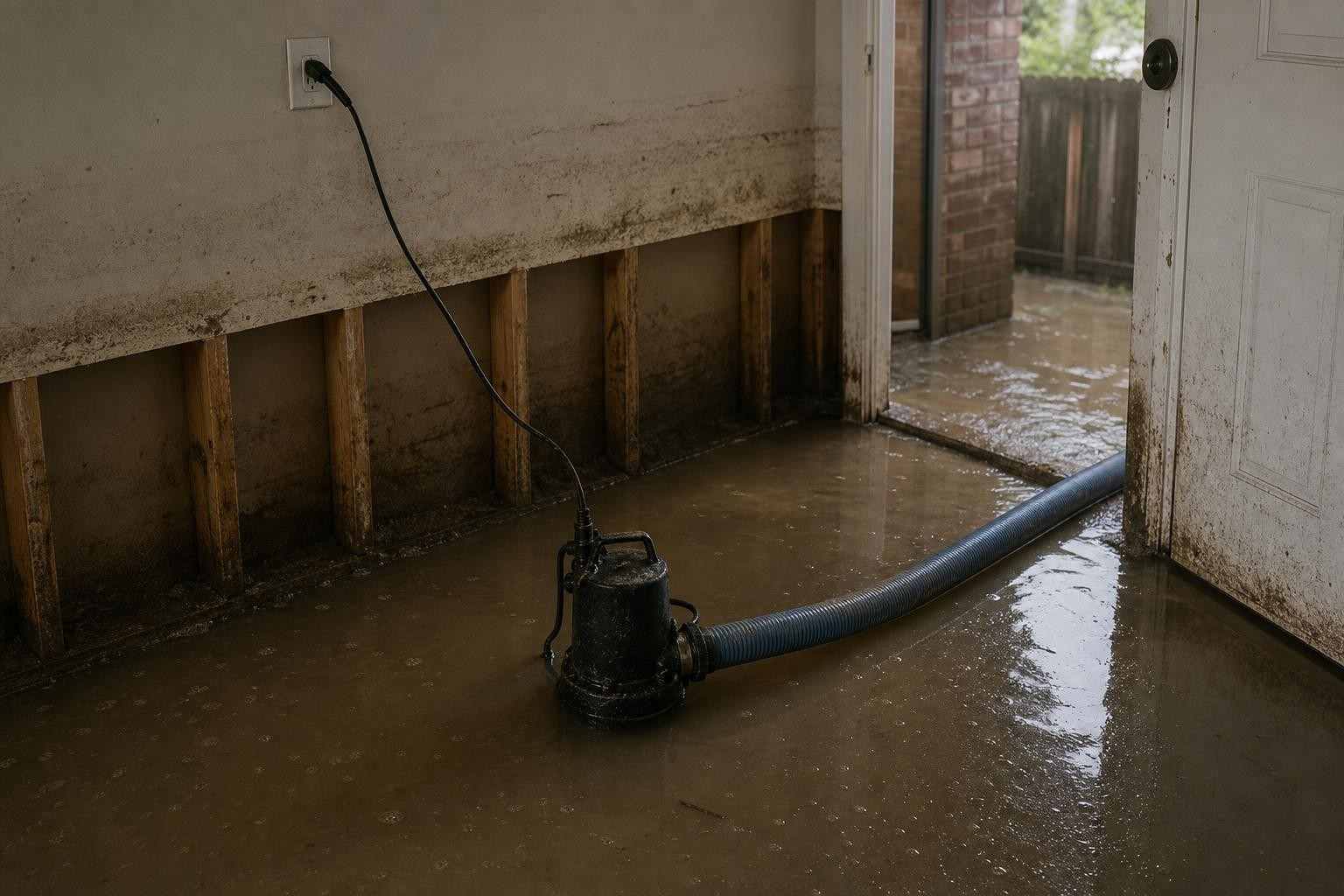
Water damage restoration in Irving, TX handles water extraction and structural drying across two risk maps: the reclaimed Elm Fork Trinity floodplain around Las Colinas and Lake Carolyn, and mid-century Plymouth Park homes on 1950s to 1960s pipe. Blackland clay slab leaks and canal backups are the calls our crews document for insurance.
Irving is on the service map for our full water damage restoration service in Dallas, and the nearest crew heads your way when you call.
Water Damage Restoration in Irving, TX
When water gets into an Irving house, the repair bill is only half the fight. The other half is proving to your carrier what happened, how far it spread, and what it cost to put right. That paper trail is where a lot of homeowners lose money, and it is the part we treat as seriously as the extraction itself. From the first call, the crew that reaches your Las Colinas condo or your Plymouth Park ranch is thinking about two things at once: get the water out, and build the record your adjuster will need to say yes.
Water Damage Restoration Dallas answers Irving calls every hour of every day, weekends and holidays included. We work out of Dallas, a quick run west on Highway 183, so the technician heading your way is pointed at Irving from the start rather than crossing the whole county to reach you. A real person picks up, the truck rolls with extraction and drying equipment on board, and the camera and moisture meter come out before we move a stick of furniture. Call (469) 804-9910 and we will tell you plainly when we can be there.
⚠️ Why Irving Homes Face Elevated Water Damage Risk
Irving splits into two very different risk maps. Up north, Las Colinas and Valley Ranch were Elm Fork Trinity River floodplain until levees, canals, and Lake Carolyn reclaimed the ground through the 1970s and early 1980s. Irving Flood Control District 3 keeps that water in check now, yet the canals and low reclaimed land mean the river stays close. South and east, Plymouth Park, Bear Creek, and the Hospital District went up in the 1950s and 1960s, and plenty of those homes still carry their original galvanized and copper supply lines. Under all of it lies Blackland clay that swells after heavy rain and shrinks hard in drought, working loose the pipes cast into your slab. An Irving claim can start from the sky, the street, or the ground beneath the floor, and each one gets documented a little differently.
Where Irving Water Losses Start
The cause of the loss drives everything that follows, from how we dry the house to whether the claim gets paid. These are the four sources behind most of the Irving jobs we run:
- Slab leaks under the shifting clay. Blackland clay never holds still, and the constant swell-and-shrink cycle strains the copper lines run through your foundation until a joint fails. The clues are subtle: a warm patch on the tile, a water bill creeping up for no reason, the faint hiss of water when the house is quiet.
- Aging pipe in the older neighborhoods. Across Plymouth Park, Irving Heights, Grauwyler Heights, and the Hospital District, a lot of the housing dates to the mid-century boom. Supply lines that have sat in the ground sixty-odd years corrode, thin at the walls, and give way at the fittings, often with no warning at all.
- Canal and river backup on the north side. Because Las Colinas and Valley Ranch sit on reclaimed floodplain, the ground there rides low even with the levee and pumps holding the line. A stalled storm or a plugged inlet can push water past where the maps say it should stop, and the flat terrain gives it nowhere fast to drain.
- Winter freeze breaks. When a hard North Texas cold snap sets in the way it did in February 2021, the lines in unheated garages, attics, and exterior walls are the first to split. One brutal overnight low can leave a whole Irving street with water running by morning.
How We Document an Irving Water Claim
An Irving adjuster is not standing in your kitchen at 2 a.m. when the pipe lets go, so the file we hand over has to speak for the loss on its own. That starts the moment we walk in. We photograph the source and the spread before extraction, grade the water category so the scope is defensible, and map the wet zones with a moisture meter and thermal camera rather than a guess. Everything that gets touched, moved, or removed goes in the record with a reason attached.
Drying is documented the same way. We log meter readings by location as the structure comes down day over day, so there is a dated, measured trail showing the house reached genuinely dry and not merely surface dry. When the claim lands on a desk, it reads as a complete story rather than a pile of receipts, which is what keeps it moving instead of bouncing back for more information. Here is what your file includes:
- Dated photos of the source, the affected rooms, and every material we remove.
- A written water category and moisture map that show how far the loss reached.
- Day-by-day drying logs with meter readings, in the format Texas carriers expect.
Water Damage Services We Provide in Irving
However the water got in, the aim stays the same: pull it out quickly, restore what it reached, and dry the structure to a reading a meter can back up. This is the full range we run for Irving property owners.
Water Extraction
Truck-mounted extractors paired with submersible pumps empty an Irving home in a fraction of the time a household wet-vac could ever manage. Some people call this water mitigation or water cleanup, and it is where every Irving water restoration and water damage repair job starts.
Water extraction in Irving TX →24/7 Emergency Water Removal
A pipe that lets go before dawn or a slab leak crawling across the kitchen has no interest in office hours, and neither do we. Call any time and a crew starts rolling toward Irving. We take 24 hour water damage calls across Irving, and that 24/7 water damage line never goes to voicemail.
Emergency water removal in Irving TX →Flood Damage Restoration
When a canal overtops or a storm drain backs up around Las Colinas and Valley Ranch, a flooded home calls for full extraction, structural drying, and cleanup. We take Irving flood jobs from soaked to sound. From flood cleanup through the flood damage repair that follows, we carry a flooded Irving home from soaked to sound.
Flood damage restoration in Irving TX →Sewage Cleanup & Sanitization
A backed-up sewer line counts as a Category 3 biohazard, well past anything a mop should touch. We contain it, haul it out, disinfect the space, and clear the odor for Irving homes and businesses. Our sewage backup cleanup covers full sewage removal and black water cleanup.
Sewage cleanup in Irving TX →Commercial Water Damage
Offices, hotels, and retail across the Las Colinas Urban Center and the Toyota Music Factory corridor. We clear the water off your floor and help keep the doors open.
Commercial water damage in Irving TX →Mold Remediation
Moisture trapped in a wall hands mold a start within a day or two. Our TDLR-licensed partners run the containment, removal, and HEPA filtration for Irving homes.
Mold remediation in Irving TX →Mold After Water Damage in Irving
The reason we push to arrive quickly comes down to the Dallas County climate. Mold needs warmth, moisture, and something to feed on, and an Irving summer delivers all three together. Under those conditions a colony can set up within 24 to 48 hours of a leak, usually behind drywall or under flooring where nothing looks wrong until the room begins to smell. Lifting the standing water is only the start. Stop there without deep drying and the dampness stays sealed in the wall, quietly working on the framing.
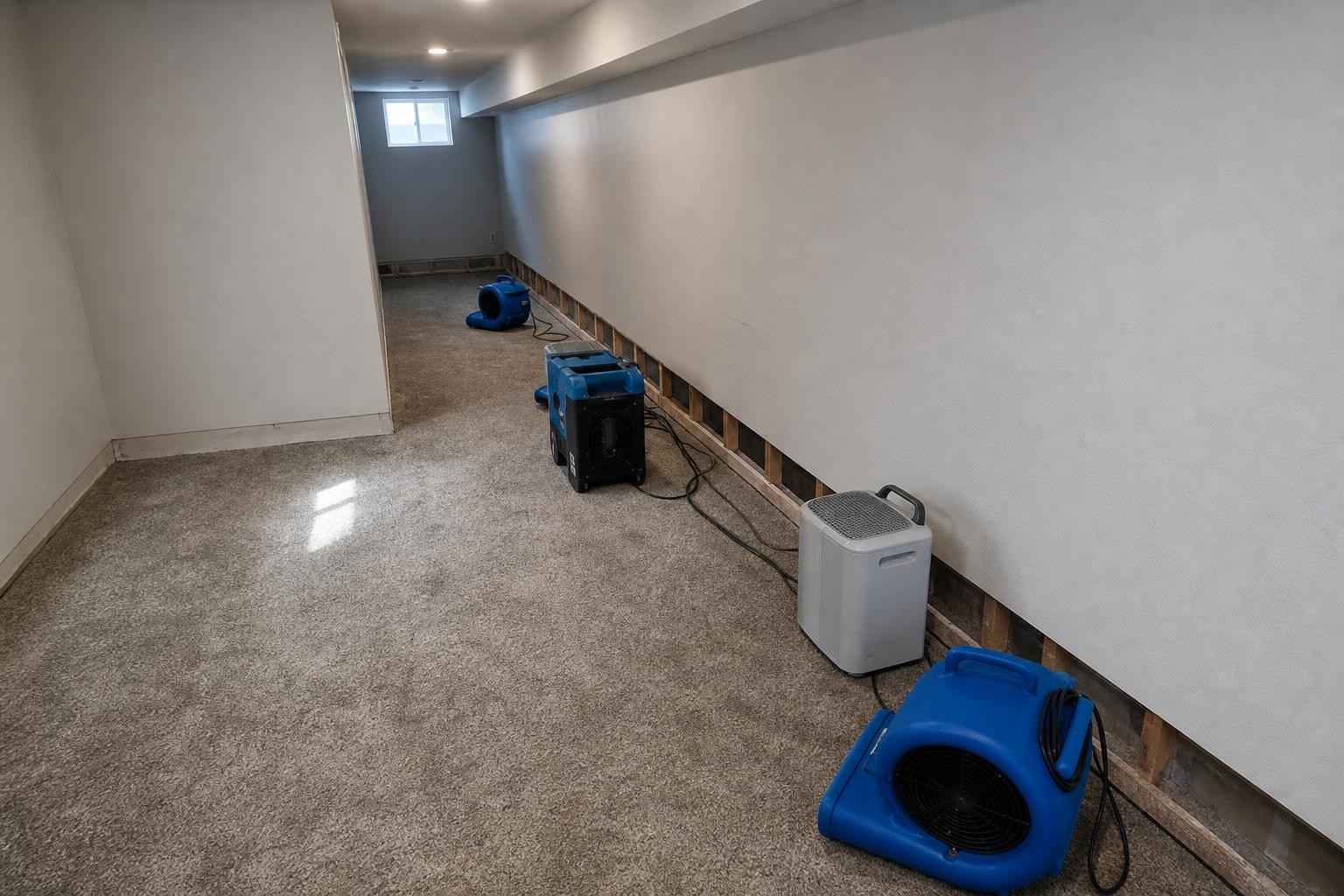
That is why drying is its own documented stage, not a quick pass. Commercial air movers and dehumidifiers work the structure while we track the numbers, then we return with moisture meters and thermal imaging to confirm the hidden spots have truly dried out. Where mold has already taken hold, our mold remediation partners handle removal and treatment.
Mold remediation and removal services are performed by or in partnership with a TDLR-licensed Mold Remediation Contractor. We do not perform mold testing, inspection, or assessment, remediation and removal only.
Neighborhoods & ZIP Codes We Serve in Irving
We take water damage calls everywhere in Irving TX, from the high-rises and canals of Las Colinas to the mid-century streets of East Irving and South Irving, every ZIP code, every hour of the day.
Irving TX Neighborhoods
Irving TX ZIP Codes
We also serve neighboring Coppell, Grand Prairie, Euless, Farmers Branch, and Dallas. View all service areas →
Official Irving TX Resources