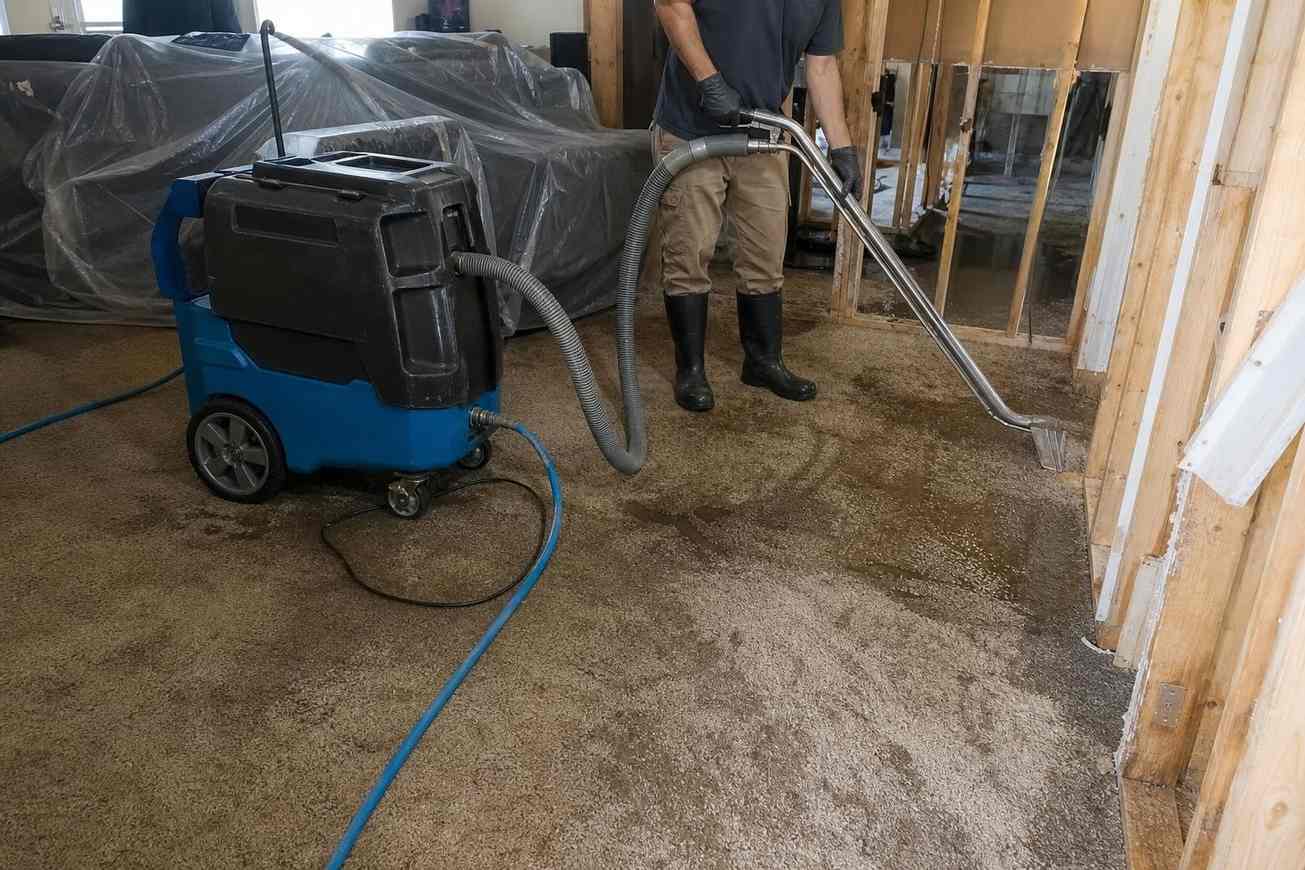
Water damage restoration in McKinney, TX means extracting water and drying homes after Wilson Creek, Honey Creek, or East Fork Trinity flooding, plus slab leaks on Blackland Prairie clay. Old plumbing near the historic downtown square and 75069 contrasts with newer Stonebridge Ranch and Trinity Falls homes built over the last two decades.
In McKinney, you get our citywide water damage restoration in Dallas, the same crew day or night.
Water Damage Restoration in McKinney, TX
Most McKinney homeowners meet a water problem at the worst possible hour. Maybe a fitting behind the fridge lets go overnight, maybe a slab leak finally works its way up through the tile, maybe a Collin County storm shoves water back through a drain and onto the floor. Whatever starts it, the water does not sit still. It creeps down the baseboards, wicks up into the drywall, and settles into the subfloor while the room above still looks fine. Add a muggy North Texas afternoon and mold has everything it needs to take hold, sometimes within a day or two.
Water Damage Restoration Dallas fields McKinney emergency calls around the clock, weekends and holidays included. We work out of Dallas, about 32 miles south with a clean run up US 75, so the crew we send is already aimed at you instead of being pulled off a job two counties over. A real person answers the phone, and the technician who arrives brings truck-mounted extraction, commercial drying equipment, and the photos and moisture readings your adjuster will end up asking for, all on that first visit. Call (469) 804-9910 and we will tell you plainly how soon we can be at your door.
⚠️ Why McKinney Homes Face Elevated Water Damage Risk
McKinney carries a tricky mix: a truly historic center ringed by neighborhoods that barely existed twenty years ago. Around the downtown square and the 75069 blocks sit homes older than most of their owners, on plumbing that has been mended more than once. Head north and west into Stonebridge Ranch, Craig Ranch, and the subdivisions off US 75, and you reach houses raised during the building rush of the last two decades, now hitting the age when their first pipe failures show up. Beneath every one of them lies the dense Blackland Prairie clay that blankets this stretch of Collin County. That clay puffs up after a rain and clamps back down through a drought, and the supply lines set into your slab flex with it. That constant working is why slab leaks lead our McKinney call sheet more weeks than not. Fold in the waterways that lace the city, Wilson Creek, Stover Creek, and the East Fork Trinity among them, the hard freezes that rupture exposed pipe, and summers that push the AC for months on end, and a McKinney household has several separate paths to a soaked floor.
McKinney's Specific Water Damage Risks
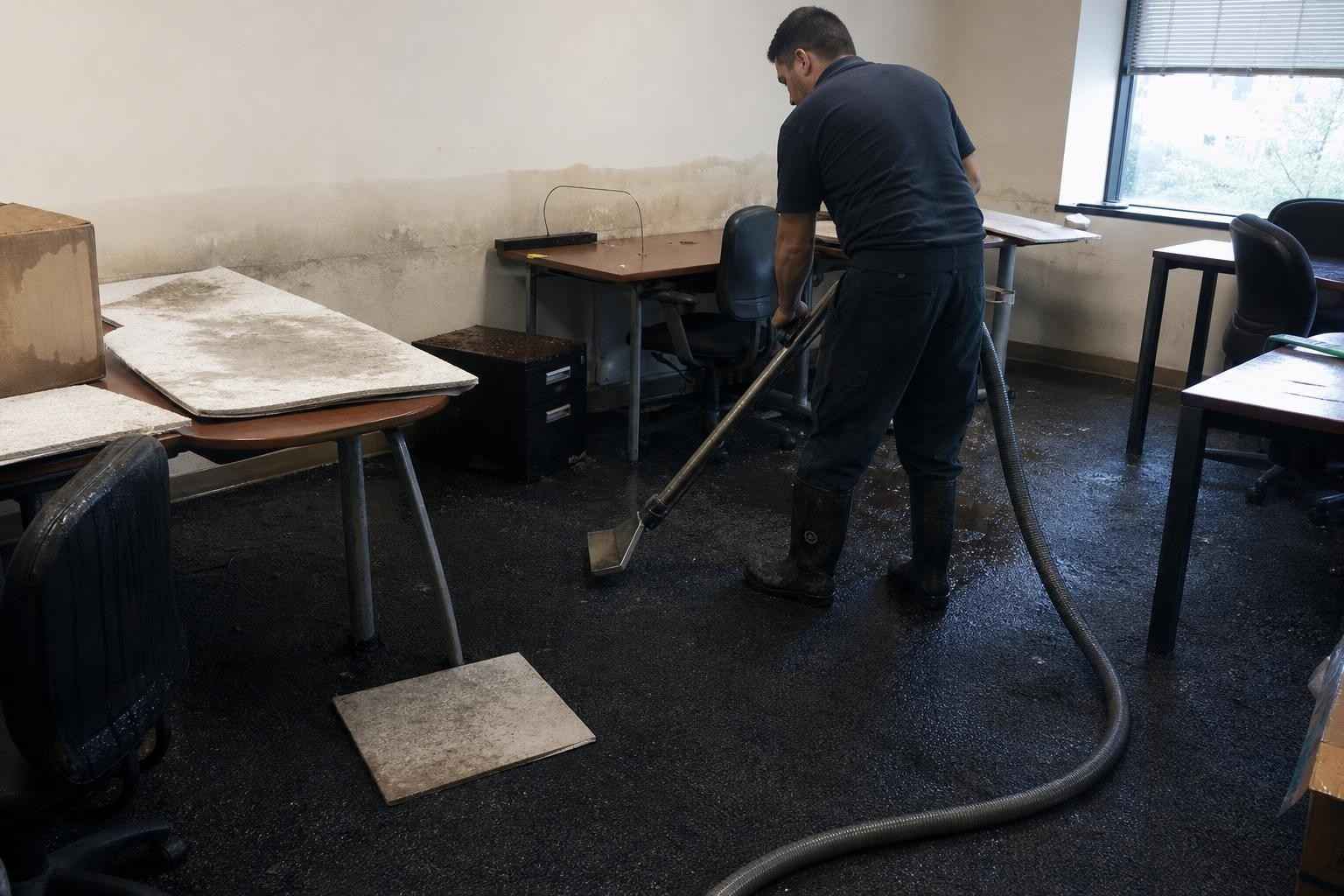
Water gets into a McKinney home through many different doors, and the way it arrived decides how we dry it back out. These are the situations that bring us up here the most:
- Creek and stormwater flooding. Wilson Creek, Stover Creek, Honey Creek, and the East Fork of the Trinity all wind through McKinney, and a heavy downpour can lift any of them into the low ground along their banks. McKinney maintains a floodplain study for Wilson Creek and its tributaries, and with the city expanding so fast along those corridors, a growing number of homes now sit near the mapped line. Even outside any flood zone, a blocked storm inlet or a street that pools can slip water under a door.
- Slab leaks in the Blackland clay. That clay under McKinney never stops shifting, and the water lines poured into your foundation absorb every bit of the strain. A warm patch underfoot, a water bill that climbs for no reason you can name, or a faint trickle you hear only when the house goes silent almost always points to a line that has already given way.
- Old plumbing near the downtown square. The historic district and the 75069 blocks around it hold some of the oldest housing stock in the county. Many of those homes still run original or early-replacement pipe that has thinned, corroded, or loosened at the joints over the decades.
- Frozen pipes after a hard freeze. When an Arctic front parks over North Texas, as the February 2021 storm did, the pipes tucked into unheated McKinney attics, garages, and exterior walls are the first to split and burst.
- Summer AC condensate spillover. Push an air handler through a McKinney August and a clogged condensate line or a rusted drain pan will eventually let go, quietly soaking a ceiling or a closet below the unit before anyone spots the stain.
- Appliance and water heater failures. A split washer hose, a weeping dishwasher fitting, or a water heater near the end of its life can spill water across a floor for hours while the family is away at work or fast asleep.
Water Damage Services We Provide in McKinney
Whether the trouble started as a slab leak under a Stonebridge Ranch build or tired pipe giving out in a 75069 bungalow, the work runs one direction: lift the water off the floor, salvage what it touched, and dry the structure until a meter confirms the number. Here is the full range we handle for McKinney property owners across Collin County.
Water Extraction
Truck-mounted extractors and submersible pumps together clear standing water from a McKinney home far faster than any garage shop vac could manage on its own. Some people call this water mitigation or water cleanup, and it is where every McKinney water restoration and water damage repair job starts.
Water extraction in McKinney TX →24/7 Emergency Water Removal
A fitting behind the fridge that lets go overnight, or a slab leak crossing the kitchen tile, keeps no office hours. Reach us any hour and we point a crew up US 75 toward McKinney. We take 24 hour water damage calls across McKinney, and that 24/7 water damage line never goes to voicemail.
Emergency water removal in McKinney TX →Flood Damage Restoration
Let Wilson Creek or the East Fork Trinity climb, or a storm drain back up, and a flooded house wants the full run of extraction, structural drying, and cleanup. We carry McKinney flood jobs from soaked to sound. From flood cleanup through the flood damage repair that follows, we carry a flooded McKinney home from soaked to sound.
Flood damage restoration in McKinney TX →Sewage Cleanup & Sanitization
A backed-up sewer line is a Category 3 biohazard, well outside what a mop should ever meet. We seal it off, remove it, disinfect the area, and clear the odor from McKinney homes. Our sewage backup cleanup covers full sewage removal and black water cleanup.
Sewage cleanup in McKinney TX →Commercial Water Damage
The shops ringing the historic square and the offices along the US 75 and SH 121 corridors flood differently than a home. We pull the water and help keep your McKinney business serving customers.
Commercial water damage in McKinney TX →Mold Remediation
Dampness sealed in a wall feeds mold within a day or two, faster still in the older housing stock near downtown. Our TDLR-licensed partners take on containment, removal, and HEPA filtration for McKinney homes.
Mold remediation in McKinney TX →Mold After Water Damage in McKinney
We move fast in McKinney for one blunt reason: the Collin County climate is a hothouse for mold. Warmth, lingering moisture, and a surface to cling to are all it requires, and a McKinney August delivers each. So a colony can be well underway a day or two after the leak, usually hidden behind drywall or under the flooring, where the smell reaches you long before any stain does. Pulling out the water is just the first move. Skip the real drying and the dampness stays sealed in the wall, quietly working on the framing.
That is why drying earns its own stage on a McKinney job. Air movers and dehumidifiers run on the structure, then we circle back with moisture meters and thermal imaging to confirm the places you cannot reach have truly dried out, not just the surface a hand can feel. Should mold already have a foothold, our mold remediation partners take over the removal and treatment.
Mold remediation and removal services are performed by or in partnership with a TDLR-licensed Mold Remediation Contractor. We do not perform mold testing, inspection, or assessment, remediation and removal only.
Neighborhoods & ZIP Codes We Serve in McKinney
We answer water damage calls all over McKinney TX, from the historic streets around the downtown square to the master-planned neighborhoods spreading north and west, every ZIP code, any hour of the day.
McKinney TX Neighborhoods
McKinney TX ZIP Codes
We also serve neighboring Frisco, Allen, Prosper, Fairview, and Melissa. View all service areas →
Official McKinney TX Resources