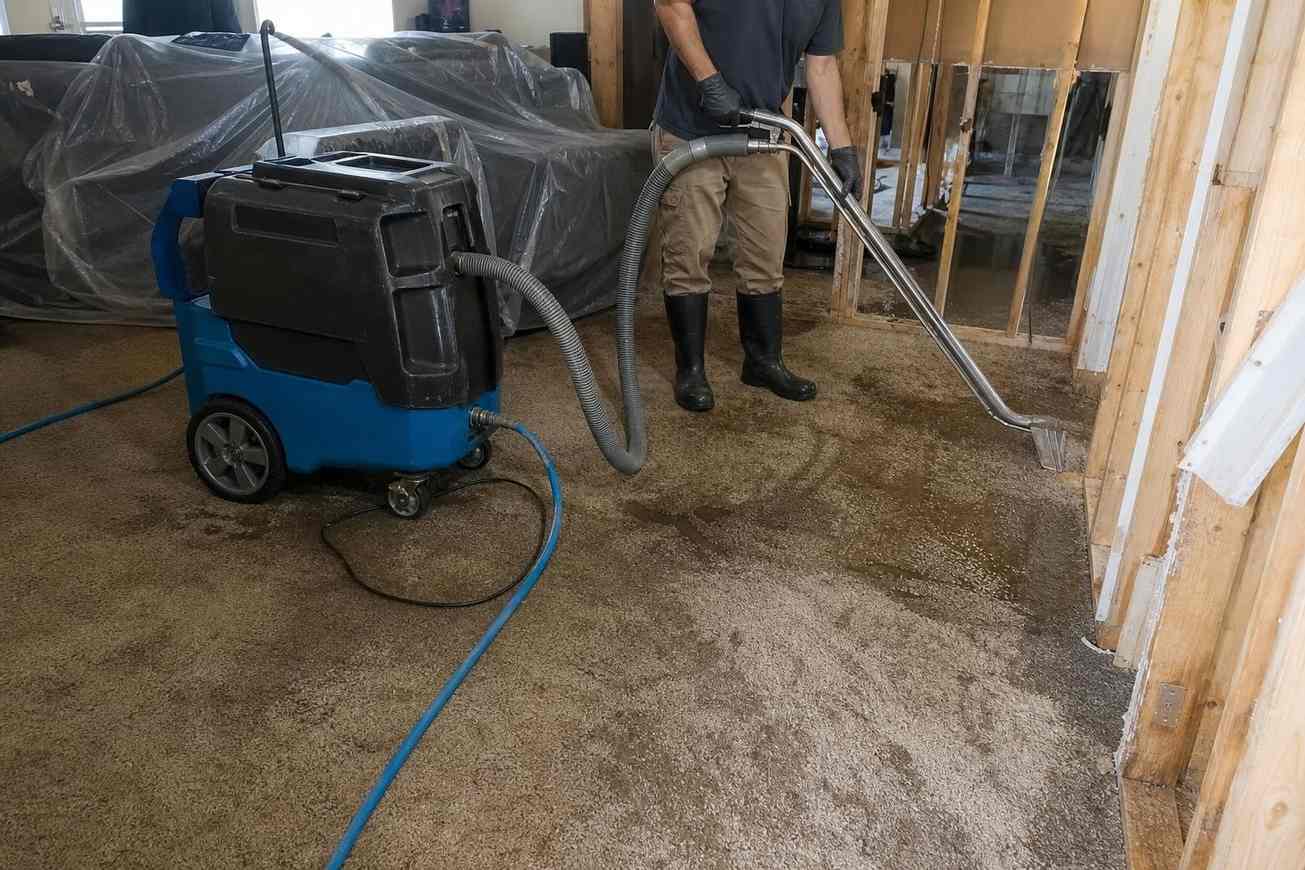
The Colony earns its 'City by the Lake' name, so losses from Lewisville Lake and Stewart Creek flooding, or slab leaks in Denton County clay, often reach an adjuster. Our crews photograph and meter the damage while extracting and drying the home. Call (469) 804-9910.
In The Colony, you get our Dallas water damage restoration crews, the same crew day or night.
Water Damage Restoration in The Colony, TX
Most water losses in The Colony end up in front of an adjuster, and how that conversation goes depends almost entirely on what got written down in the first hour. A supply line lets go behind a Stewart Peninsula wall, a slab line finally splits under a Ridgepointe kitchen, or a storm off Lewisville Lake pushes runoff back through a drain, and suddenly you are not just drying a house, you are building a case for who pays. The water spreads under baseboards and beneath the flooring while the surface still reads dry, and in the lake air that hidden moisture starts feeding mold fast, so the record has to be started while the damage is still fresh.
Water Damage Restoration Dallas answers The Colony calls around the clock, weekends and holidays included. We stage in Dallas roughly 26 miles south, so the technician assigned to you is already pointed toward the lake when you hang up, not being paged after the fact. A real person takes the call, and the crew arrives ready to both stop the loss and document it: extraction gear, commercial drying equipment, moisture meters, and a camera that captures the room before we touch anything. Call (469) 804-9910 and we will tell you plainly how soon we can be there and what your insurer will want on file.
⚠️ Why The Colony Homes Face Elevated Water Damage Risk
The nickname "City by the Lake" is not marketing, it is the water risk in three words. Lewisville Lake wraps the entire western edge of town, and the Army Corps of Engineers manages its level with seasonal releases, which keeps Stewart Creek and the low shoreline streets exposed whenever a wet stretch stacks up. Beneath the yards sits Denton County's expansive clay, which swells after rain and shrinks hard through drought, working the supply lines cast into your slab loose a little more with every cycle. That movement is why slab leaks stay high on our The Colony call list. Add a housing mix that runs from the 1970s Eastvale streets through the 1990s and 2000s buildout, the occasional freeze that snaps an exposed pipe, and cooling systems that run half the year, and a single home here has several independent paths to a wet floor, each of which an insurer treats differently.
The Colony's Specific Water Damage Risks
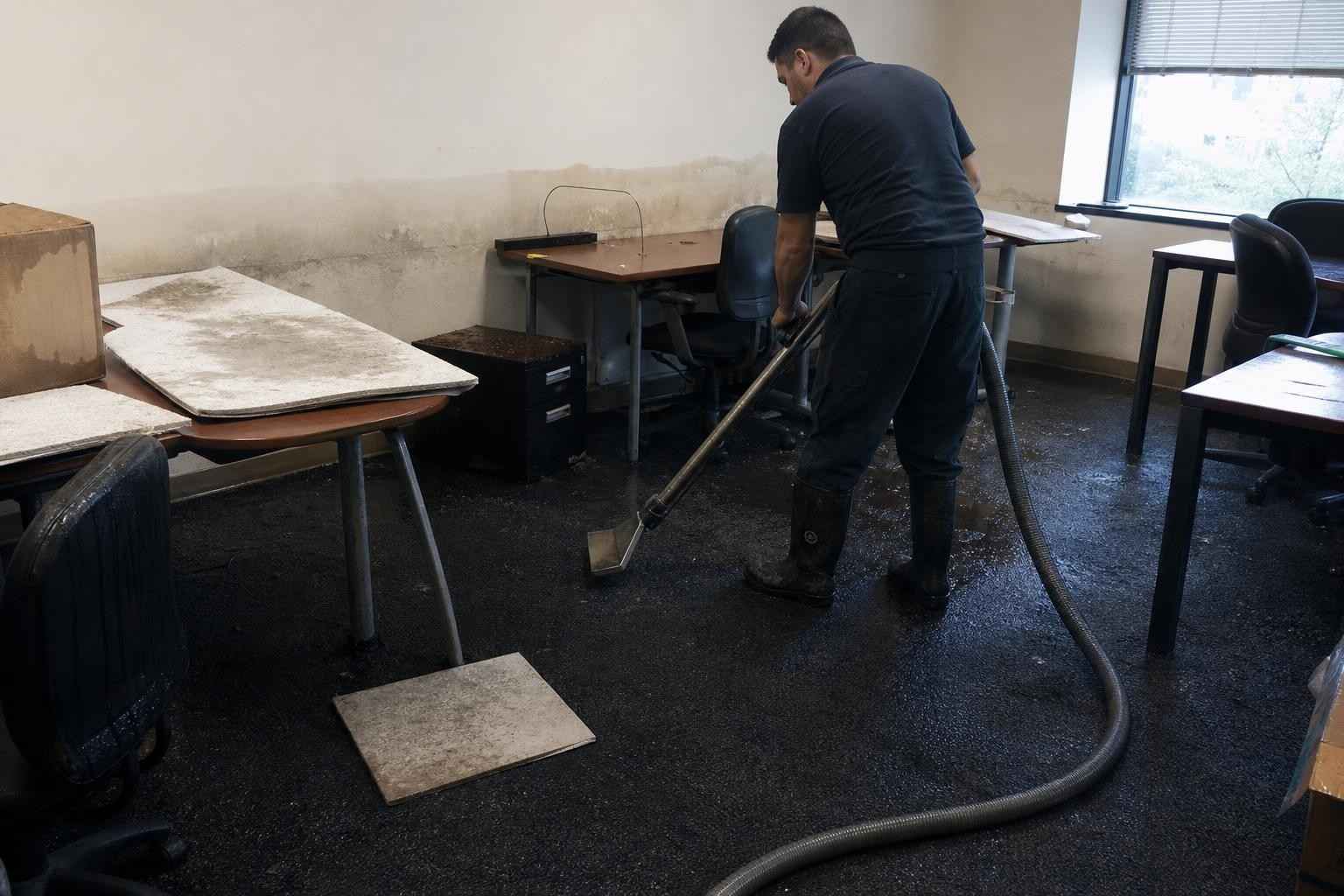
The cause of the loss is the first thing an adjuster asks about, because coverage often hinges on it, so it is the first thing we establish on site. In The Colony the sources cluster into a short, familiar set:
- Slab leaks from shifting clay. The Denton County clay under The Colony flexes with every wet-dry swing, and that strain travels into the supply lines run through your foundation. A patch of floor that stays warm, a water bill that climbs for no clear reason, or a faint hiss you notice only when the house is quiet usually means a line beneath the slab has already failed, and these are the losses where documentation of a sudden failure matters most.
- Lake and stormwater flooding. Lewisville Lake runs the length of the west side and Stewart Creek cuts through the middle of town, so a wet week can raise the water table and drive runoff into shoreline and low streets. Parts of The Colony sit inside the mapped floodplain, and this type of loss typically falls under a separate NFIP flood policy rather than a standard homeowners policy.
- Burst pipes after a hard freeze. When a North Texas cold snap settles in the way February 2021 did, the exterior walls, attics, and unheated garages around The Colony are where lines freeze and rupture first, and a sudden burst is usually the most clearly covered scenario we see.
- Appliance and water heater failures. A cracked washer hose, a leaking dishwasher fitting, or an aging water heater can let go while nobody is home and run for hours, and whether that is covered often comes down to how quickly it is found and recorded.
How We Document a The Colony Water Claim
Restoration and paperwork are not separate jobs to us, they run at the same time. From the moment the crew steps into a The Colony home, one technician works the water while another builds the file: wide shots of each affected room before anything moves, close shots of the failed pipe or the stained ceiling, and moisture readings logged room by room so there is a dated baseline the day the loss is discovered. When the source points to a sudden failure, a frozen line or a snapped supply fitting, we make sure that shows plainly in the photos, because that distinction is often what separates a covered claim from a denied one in Denton County.
From there the record grows on its own schedule. Every drying day we note meter numbers, equipment placement, and how far the readings have dropped, so by the time your adjuster calls there is a continuous, timestamped trail rather than a guess. We hand the whole package over in the format carriers here are used to seeing, and we say up front when something looks like it may not be covered so you are never surprised late in the process. What we put in an insurance file for a The Colony loss:
- Dated before photos of every affected room plus close-ups of the failure point, tied to the day the damage was found.
- Room-by-room moisture and humidity readings taken on arrival and logged again each drying day until the structure reads dry.
- An itemized equipment and drying log, in the layout Denton County adjusters expect, ready to hand off the moment the claim opens.
Water Damage Services We Provide in The Colony
However the water got in, the target is the same: pull it off the floor fast, save what it reached, and dry the structure to a number a meter can verify. Here is the full range we handle for The Colony property owners.
Water Extraction
Truck-mounted extractors paired with submersible pumps empty a The Colony home far quicker than any household wet-vac could hope to. Some people call this water mitigation or water cleanup, and it is where every The Colony water restoration and water damage repair job starts.
Water extraction in The Colony TX →24/7 Emergency Water Removal
A supply line that lets go before sunrise or a slab leak crawling across the tile has no interest in office hours. We pick up any time and point a crew toward the lake. We take 24 hour water damage calls across The Colony, and that 24/7 water damage line never goes to voicemail.
Emergency water removal in The Colony TX →Flood Damage Restoration
When lake runoff or a storm-swollen Stewart Creek reaches a home, it takes full extraction, structural drying, and cleanup. We carry The Colony flood jobs from soaked to sound. From flood cleanup through the flood damage repair that follows, we carry a flooded The Colony home from soaked to sound.
Flood damage restoration in The Colony TX →Sewage Cleanup & Sanitization
A backed-up sewer line counts as a Category 3 biohazard, well past anything a mop can touch. We contain it, haul it out, disinfect the space, and clear the odor across The Colony. Our sewage backup cleanup covers full sewage removal and black water cleanup.
Sewage cleanup in The Colony TX →Commercial Water Damage
Offices, storefronts, and the restaurants and shops strung along the Austin Ranch and Grandscape corridors. We clear the water off your floor and help keep the doors open.
Commercial water damage in The Colony TX →Mold Remediation
Moisture left in a wall hands mold a start within a day or two. Our TDLR-licensed partners run the containment, removal, and HEPA filtration for The Colony homes.
Mold remediation in The Colony TX →Mold After Water Damage in The Colony
The reason we push to reach The Colony quickly comes back to the lakeside humidity. Mold needs only warmth, moisture, and a surface to take hold, and a summer beside Lewisville Lake hands it all three. Under those conditions a colony can establish itself within 24 to 48 hours of a leak, usually behind drywall or under flooring where a smell tips you off long before a stain does. Pulling the standing water is only the opening move. Stop there and skip the deep drying, and you have simply trapped the dampness in the wall cavity where it keeps working on the framing, which is also why a well-documented drying record matters, it shows the moisture was actually chased out.
That is why drying gets treated as its own stage with its own proof. We run the structure down with air movers and dehumidifiers, then come back through with moisture meters and thermal imaging to confirm the hidden pockets have truly dried, logging each reading as we go. Where mold has already taken hold, our mold remediation partners handle the removal and treatment.
Mold remediation and removal services are performed by or in partnership with a TDLR-licensed Mold Remediation Contractor. We do not perform mold testing, inspection, or assessment, remediation and removal only.
Neighborhoods & ZIP Codes We Serve in The Colony
We take water damage calls everywhere in The Colony TX, from the lakeside communities out on Stewart Peninsula to the family streets pushing toward Grandscape and the SH 121 corridor, every ZIP code, every hour of the day.
The Colony TX Neighborhoods
The Colony TX ZIP Codes
We also serve neighboring Frisco, Little Elm, Lewisville, Carrollton, and Plano. View all service areas →
Official The Colony TX Resources