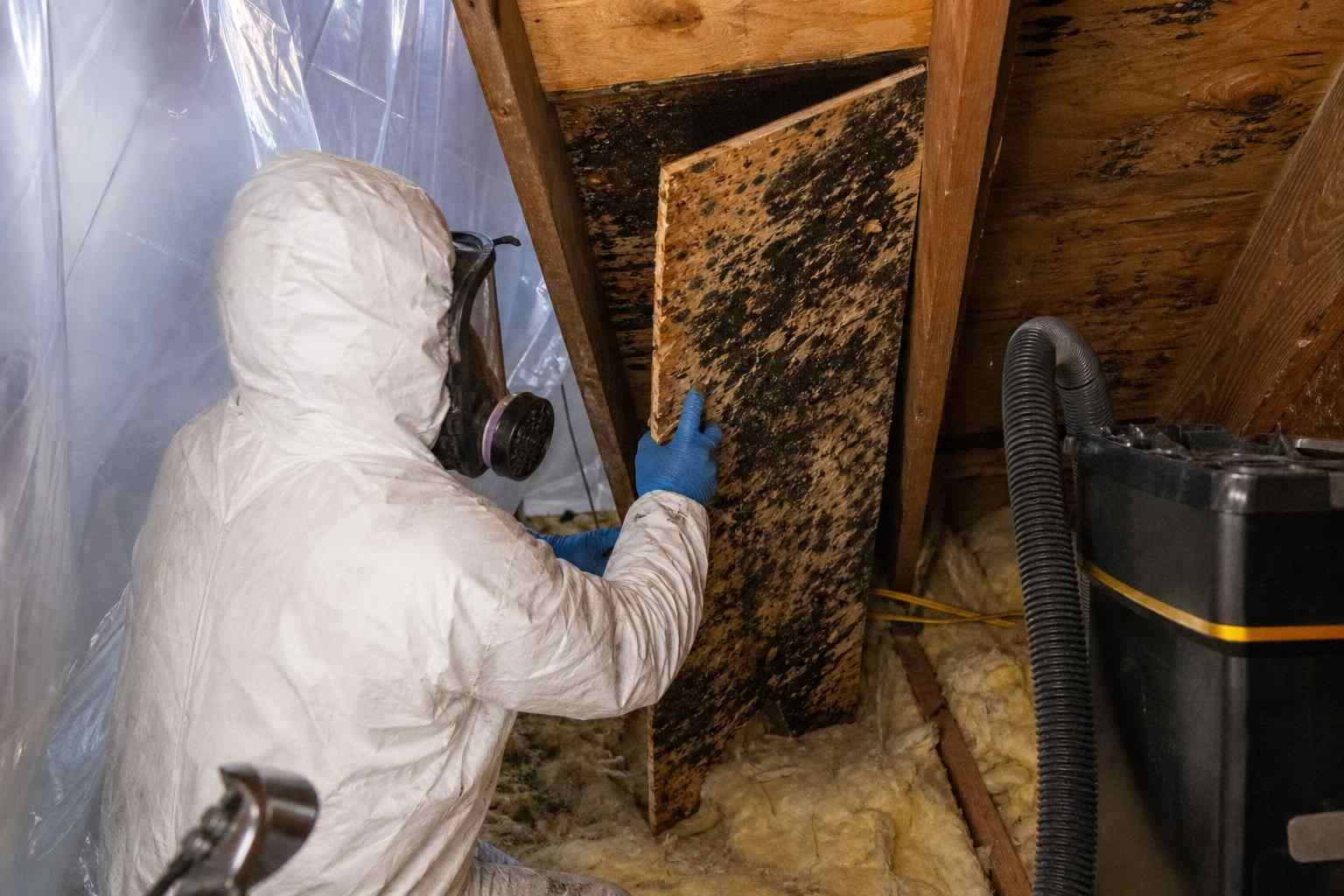
Mold remediation usually takes 1 to 3 days for a small, contained patch on hard surfaces, and 5 days to a couple of weeks for larger growth, HVAC involvement, or whole-home mold. Drying is the slowest phase. In Texas, over 25 contiguous square feet needs a TDLR-licensed remediation contractor.
The Short Answer: A Realistic Timeline
How long mold remediation takes depends almost entirely on how much mold there is and how deep the moisture went. For a small, contained job, one confined to a single room or a defined patch on hard surfaces, the whole process is often 1 to 3 days. That covers containment, cleaning, removal of a few damaged materials, and drying.
For a bigger problem, plan on more. When mold has spread across several rooms, gotten into the HVAC system, or grown through much of the home, a realistic window is 5 days to a couple of weeks. The reason for the spread is not that crews work slowly. It is that larger areas mean more porous material to remove, more drying time, and a mandatory re-check at the end to confirm the work is done. We will not pretend a number that we cannot know for your exact home, but those two ranges cover the large majority of jobs.
💡 Two Timelines to Keep Separate
There is the hands-on remediation itself, and there is the drying that has to finish before and during it. Drying runs on the home's schedule, not the crew's. Saturated framing and slab do not care how fast anyone wants to work, which is why even a small job that looks simple can still take a couple of days.
Why the Water Damage Comes First
This is the part people skip, and it is the part that matters most. Mold is the second problem. Water is the first. If the leak, the flood, or the moisture source that fed the mold is still active or the materials are still wet, remediating the mold is pointless, because it comes right back. The moisture has to be fixed and the structure dried before mold removal can succeed.
That is exactly where our crews fit. We handle the water side: finding and stopping the source, extracting standing water, and drying the structure down to a safe moisture level. Once the home is dry, licensed partners handle the mold remediation itself. Start with our water extraction service to pull out the water, and our mold remediation page to see how the two connect.
Mold remediation services are performed by or in partnership with a TDLR-licensed Mold Remediation Contractor. We do not perform mold testing, inspection, or assessment.
The Phases of Mold Remediation, Step by Step
Every proper mold job follows the same sequence, whether it takes two days or two weeks. Understanding the phases tells you why the clock runs the way it does.
1. Inspection and assessment
The problem gets scoped: how far the mold spread, where the moisture came from, and which materials are affected. In Texas, this assessment is done by a separate licensed party from the one doing the removal. Under the state mold rules, the assessor and the remediator have to be different licensed parties, and remediation of more than 25 contiguous square feet must be done by a licensed mold remediation contractor.
2. Containment
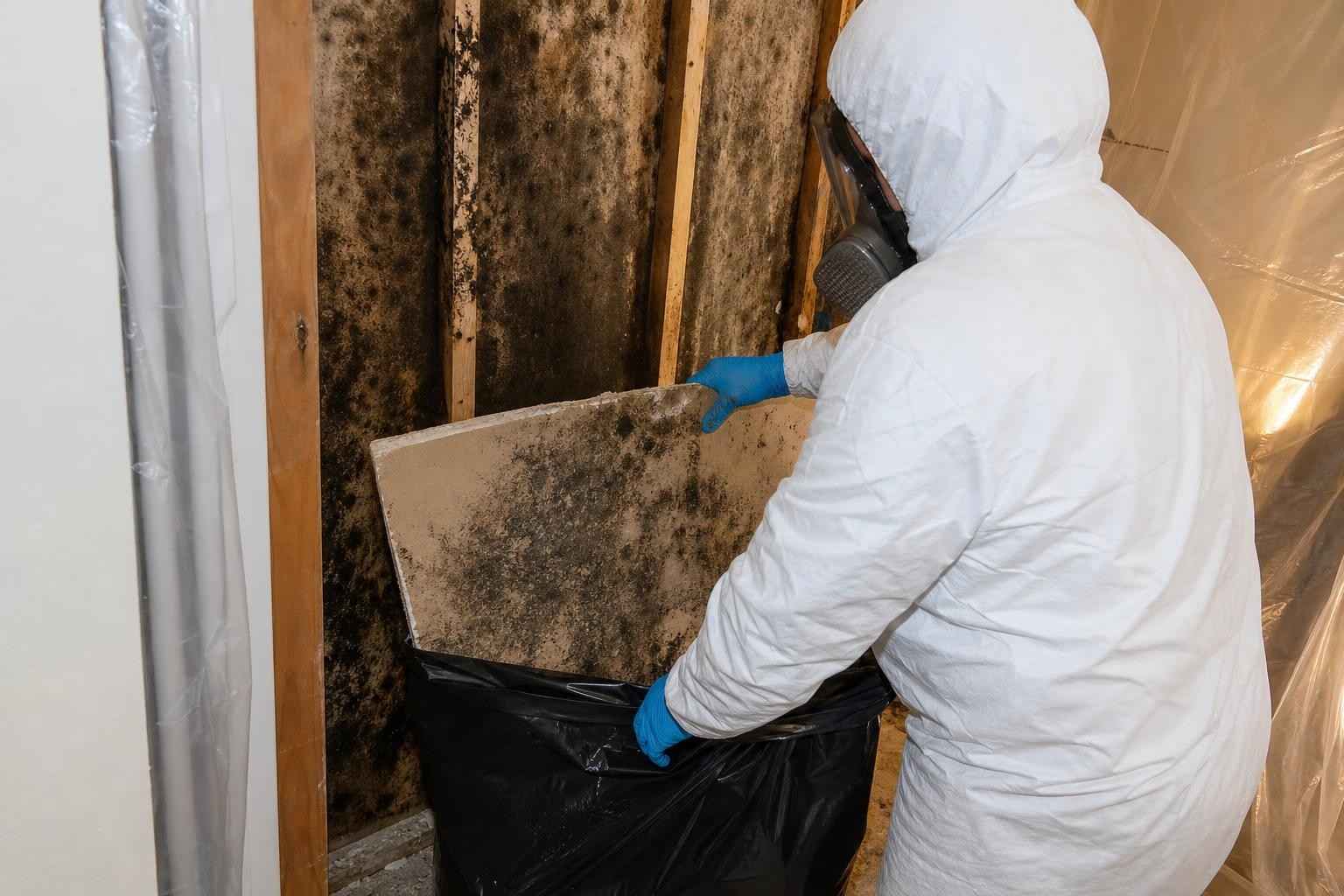
Before anything is disturbed, the work area is sealed off with plastic sheeting and negative air pressure so spores do not drift into clean parts of the home. This step protects the rest of your house while the mold is removed.
3. HEPA air filtration
Air scrubbers with HEPA filters run throughout the job to capture airborne spores. They keep running while materials are removed and the area is cleaned.
4. Physical removal
The mold itself is removed. Non-porous surfaces are cleaned, and porous materials that soaked up the moisture, like drywall, carpet, and ceiling tile, usually have to be cut out and discarded, because mold grows into the material and cannot be fully cleaned off.
5. Drying
The area is dried thoroughly. The EPA guidance is to dry water-damaged areas within 24 to 48 hours, but saturated framing and slab can take longer, and drying often overlaps with the earlier steps rather than waiting until the end.
6. Clearance and re-check
Finally, the work is verified, ideally by that separate licensed assessor, to confirm the mold is gone and moisture levels are back to normal before the space is rebuilt. On black mold specifically, our black mold removal page walks through what removal looks like in practice, and our guide on what to do about black mold covers the first steps to take.
Why Drying Takes So Long
Drying is the phase that surprises people, because a surface can look and feel dry while the material underneath is still holding water. The EPA window of 24 to 48 hours is the target for getting a wet area dried out, and it is realistic for surfaces and lightly affected materials. But when water has soaked into framing, subfloor, or a slab, pulling that moisture back out takes longer, sometimes several days of running air movers and dehumidifiers.
This is not padding. Rushing the drying is how mold comes back a month later. Crews use moisture meters to confirm the structure has actually reached a safe, dry level rather than guessing from the surface. The wetter and more porous the materials, the longer this phase runs, and it is the single biggest reason a job stretches from days into a week or more.
⚠️ Hidden Moisture Extends Everything
Water that traveled inside a wall cavity, under flooring, or into the HVAC system is the most common reason a timeline blows out. What looks like a small visible patch can be the tip of a much larger wet area behind the drywall. That is why the assessment step matters, and why an honest crew will not promise a firm end date until they have found the full extent of the moisture.
What Slows a Mold Job Down
If you want to predict your own timeline, these are the factors that push it toward the longer end:
- Extent of growth. A single patch is fast. Mold across several rooms is not.
- Hidden moisture. Water behind walls or under floors adds inspection and drying time.
- Porous materials to remove. The more drywall, carpet, and insulation that has to be cut out and hauled away, the longer the removal phase.
- Drying time. Saturated framing and slab can take days beyond the 24 to 48 hour window to reach safe moisture levels.
- HVAC involvement. If mold got into the ductwork or air handler, the system has to be cleaned too, which adds a whole layer of work.
- Re-testing. The final clearance check, done by a separate licensed party, has to confirm the job before rebuild can start.
Attics and crawl spaces are common Dallas problem zones for exactly these reasons, poor ventilation plus lingering humidity. If you are not sure whether your attic is affected, our guide on the signs of mold in your attic covers what to look for in those hidden spaces where moisture sits unnoticed.
✅ Speed on the Water Side Shortens Everything
The single best way to keep a mold timeline short is to get the water out fast. The sooner the structure is dried, the less material mold can grow into, and the smaller the eventual remediation. Drying within the first day or two, rather than letting a wet home sit, can be the difference between a 1 to 3 day job and a two week one.
Can You Stay Home During It?
For a small, contained job in one area, many people stay in the home. The containment barriers and HEPA filtration are designed to keep the rest of the house safe while one room is worked on, and you simply avoid the sealed-off zone.
For larger jobs, whole-home growth, HVAC involvement, or work in a central living area, it is often more practical, and sometimes safer for sensitive people, to stay elsewhere while the heaviest work happens. There is no single rule here. It depends on where the mold is, how much of the home is affected, and who lives there. The crew doing the work will tell you honestly whether staying is reasonable for your specific situation.
When Can You Move Back In?
Moving back is not the same as the mold being gone. The mold can be removed, but the space is not truly ready until it has dried to a safe level, passed the clearance check, and any rebuild, replacing drywall, flooring, or trim, is done. For a small job, that can all wrap in a few days. For a large one, the remediation might finish in a week while the rebuild adds more time on top.
The honest answer is that you move back when the home is dry, verified clear by a separate licensed assessor, and put back together, not a day before. Rushing it just risks the mold returning. If you are dealing with mold right now, the fastest path is to get the water handled today. Call us at (469) 804-9910 and we will get the drying started and connect you with licensed remediation partners.