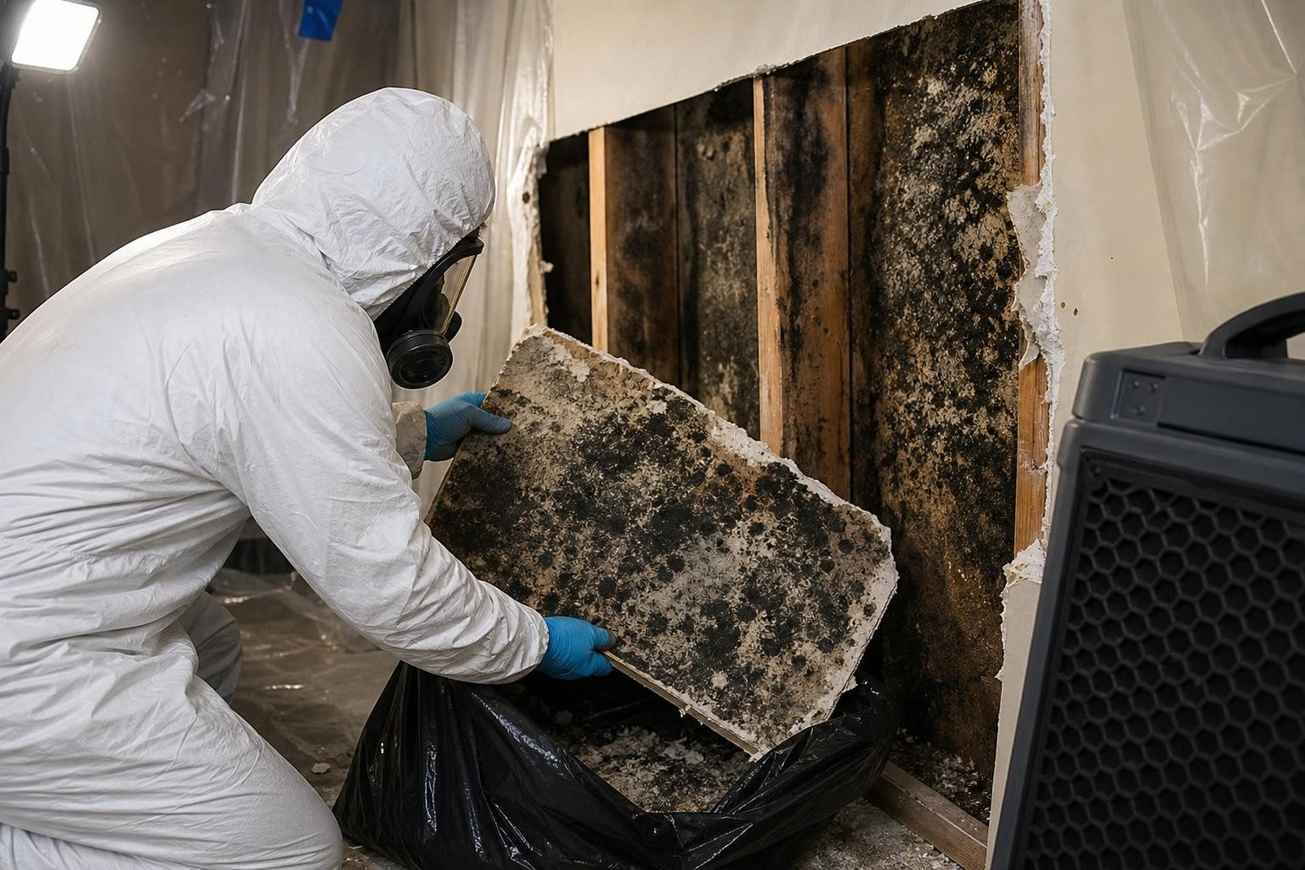
Texas mold laws, set by the Texas Mold Assessment and Remediation Rules (TMARR) and enforced by the TDLR, require any remediation over 25 contiguous square feet to be done by a TDLR-licensed remediation contractor, with the assessor and remediator kept as separate licensed parties. Homeowners may remediate their own owner-occupied home without a license.
The Short Version of Texas Mold Law
Texas mold laws come down to one core idea: once a mold problem passes a certain size, only licensed professionals can legally remediate it, and the state keeps the person who judges the mold separate from the person who removes it. That separation exists to stop conflicts of interest, so nobody can inflate a problem just to sell you more work.
The rules are spelled out in the Texas Mold Assessment and Remediation Rules, usually shortened to TMARR, which live in Chapter 1958 of the Texas Occupations Code and are enforced by the Texas Department of Licensing and Regulation. If you own a home in Dallas or rent one, a few key thresholds decide what you can do yourself and when a licensed contractor has to step in. The rest of this guide walks through each one.
The Rules That Govern Mold in Texas (TMARR)
Texas is one of the states that formally regulates mold work. Under TMARR, mold assessment and mold remediation are licensed activities, handled by the Texas Department of Licensing and Regulation, better known as TDLR. In practice, that means a company cannot just show up, declare your home has a mold crisis, and start tearing out walls without the proper license behind it.
The framework recognizes a few different roles. A licensed mold assessor is the party that evaluates the mold, takes samples if needed, and writes up a protocol for how it should be handled. A licensed mold remediation contractor is the party that actually performs the removal and cleanup according to that protocol. Keeping those roles in separate hands is the backbone of the whole system.
💡 Why Texas Regulates Mold at All
Before these rules existed, some operators would test a home, declare a scary mold problem, and then sell themselves the remediation to fix it. TMARR was built to close that loophole. By licensing the work and forcing the assessor and remediator to be different parties, Texas made it much harder to manufacture a problem just to profit from the solution.
The 25 Square Foot Rule Explained
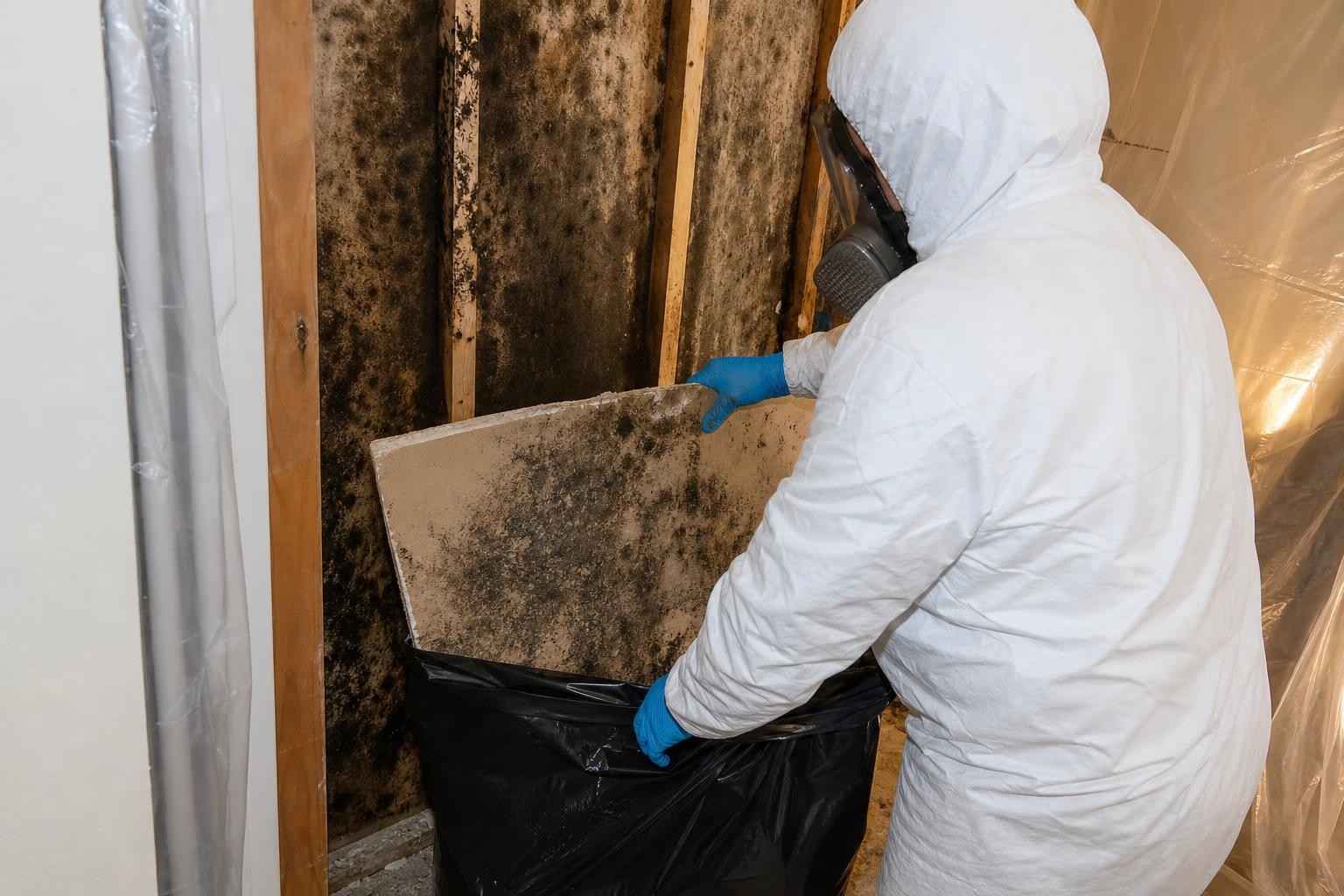
This is the number that decides almost everything. Under TMARR, if the mold covers more than 25 contiguous square feet, the remediation must be performed by a TDLR-licensed mold remediation contractor. Contiguous simply means connected, so a single spreading patch that adds up to more than 25 square feet crosses the line, even if it started small.
Below that threshold, the state gives more room for a property owner to handle a limited amount themselves. Above it, the law treats the job as one that needs licensed, trained professionals with the right containment, equipment, and disposal procedures. It is a bright line, and it is the first thing a reputable company will assess when they look at your situation.
⚠️ Size Can Be Deceiving
What looks like a small patch on the surface is often much larger inside the wall or above the ceiling. Mold spreads where you cannot see it, behind drywall, under flooring, and inside HVAC systems. By the time it shows through the paint, the affected area may already be well past 25 square feet. When in doubt, treat it as a job for licensed professionals rather than guessing.
Why the Assessor and Remediator Must Be Different
One of the most important pieces of Texas mold law is the separation between assessing and remediating. Under TMARR, the licensed party that assesses the mold and the licensed party that remediates it must be different parties. In other words, the company that decides how bad the problem is cannot also be the company that gets paid to remove it.
This protects you directly. It removes the incentive for anyone to exaggerate a problem in order to win a bigger cleanup contract. The assessor writes an independent protocol, the remediator follows it, and a separate check confirms the work was done. For a homeowner, the practical takeaway is simple: be cautious of any single company that offers to both test your mold and remediate it in the same breath, because that is exactly the arrangement the law is designed to prevent.
This site connects owners with licensed remediation partners and does not test, inspect, or assess mold. Assessment is performed by a separate, independently licensed party as Texas law requires.
The Certificate of Mold Remediation
On qualifying jobs, Texas mold rules provide for a document called a certificate of mold remediation. After a licensed remediation is completed and passes the required clearance, the licensed professionals involved can issue this certificate confirming the work was performed properly according to the protocol.
That piece of paper matters more than it looks. It can be important when you sell your home, because it gives a buyer documented proof that a past mold problem was handled correctly by licensed parties rather than papered over. Texas law also limits an insurer's ability to raise your premium or deny coverage based on a mold claim if you have a certificate showing the property was properly remediated. Keep it with your important home records.
The Homeowner Exemption
Here is the part that surprises people: the licensing rules are aimed at companies you hire, not at you cleaning your own home. Under the owner-occupant exemption, a homeowner may remediate mold in their own owner-occupied home themselves, even above the 25 square foot threshold, without holding a license.
That said, being legally allowed to do something is not the same as it being a good idea. A large mold problem usually means a serious moisture source and hidden growth, and DIY cleanup on that scale can spread spores, miss the root cause, and leave you worse off. The exemption exists for the owner who wants to handle a manageable job, not as encouragement to take on a whole-house remediation with a bucket and a mask.
✅ Remember: Mold Is a Water Problem First
Whether the law lets you do the work or not, mold only grows because something is wet. If you clean mold without fixing the leak, the slab issue, or the humidity behind it, the mold comes right back. That is where we come in. Our Dallas crews handle the water damage, structural drying, and the moisture source, which is the part that actually keeps the mold from returning.
Mold, Landlords, and Tenant Rights in Texas
If you rent your home, the picture shifts. Texas law gives landlords a duty to repair conditions that materially affect the physical health or safety of an ordinary tenant. A serious mold problem caused by a leak or unaddressed water intrusion can fall squarely into that category, which means the responsibility to fix it often sits with the landlord, not the renter.
The process generally starts with putting the request in writing. A tenant typically has to notify the landlord of the problem, usually in writing and while current on rent, and give a reasonable chance to make the repair. If the landlord ignores a genuine health-and-safety issue, Texas tenants have remedies available under the Property Code. If you are a tenant dealing with mold, document everything, keep copies of your notices, and know that the underlying water problem is what needs to be solved, whoever ends up paying for it.
What This Means When You Hire Help
Put it all together and Texas mold law gives you a clear checklist for hiring safely. A job over 25 contiguous square feet needs a TDLR-licensed remediation contractor. The party assessing the mold should be separate from the party remediating it. And on qualifying jobs, you should expect a certificate of mold remediation at the end.
Here is where we fit within those rules. We are a water damage restoration company, so our job is the water that feeds the mold: emergency response, extraction, structural drying, and fixing the moisture source. We handle that side directly and connect you with licensed remediation partners for the mold work itself, keeping assessment and remediation in the separate, independent hands the law requires. Start with our mold remediation, black mold removal, or attic mold removal pages, or just call and we will walk you through the right next step. For the health side of the question, our guide on what to do about black mold and our breakdown of whether insurance covers mold remediation go deeper.
Mold remediation services are performed by or in partnership with a TDLR-licensed Mold Remediation Contractor. We do not perform mold testing, inspection, or assessment, and we do not hold ourselves out as a licensed mold assessor.