For Balch Springs homeowners, water damage tends to come from slab leaks under blackland clay, worn mid-century plumbing around Five Points and Elam Road, or Hickory Creek flooding along the Trinity bottomlands. We extract the water, dry the home, and document the loss for your claim. Call (469) 804-9910.
We serve Balch Springs through the wider Dallas water damage restoration service, which puts the same equipment and around the clock dispatch at your door.
Water Damage Restoration in Balch Springs, TX
Ask any Balch Springs homeowner who has filed a water claim and they will tell you the cleanup was only half the battle. The other half was proving to the insurance carrier what happened, how far it spread, and that the structure was actually dried out. That second half is where a lot of homeowners lose money, because the crew that pulled the water never wrote anything down. We work the other way around. From the minute a technician steps into your Five Points bungalow or an older ranch off Elam Road, we are extracting water and building the paper trail at the same time.
Water Damage Restoration Dallas answers the Balch Springs line every hour of the day, weekends and holidays included. Our base is in Dallas, a short run west on I-635 and Highway 175, so the technician sent your way is already headed toward the city rather than crossing the county to get there. A live person answers the phone, and the crew shows up on the first trip with truck-mounted extraction, commercial drying gear, and a camera. Call (469) 804-9910 and we will tell you straight how soon we can be there.
⚠️ Why Balch Springs Homes Face Elevated Water Damage Risk
Geography sets the table for Balch Springs. The city sits on the eastern edge of Dallas County, pressed up against the Trinity River bottomlands and built on the heavy blackland clay this part of the Blackland Prairie is named for. That soil swells after a soaking rain and shrinks hard through a dry spell, and the supply lines cast into your foundation absorb every one of those swings, which is why slab leaks stay near the top of our Balch Springs call list. The city incorporated in 1953 and much of its housing went up in the mid-century decades, so plenty of homes still run on decades-old lines that corrode and eventually part at a joint. Add Hickory Creek, which rises inside the city limits and has spilled into neighborhoods more than once, and a homeowner here can reach a wet floor by several different roads.
What Puts Balch Springs Homes at Risk
The cause of a loss decides two things at once: how we run the cleanup, and how your carrier is likely to treat the claim. In Balch Springs, most of the water we chase down comes from four recurring sources.
- Slab leaks under shifting blackland clay. The clay beneath Balch Springs is always on the move, and the supply lines buried in your slab carry that strain every day. A patch of floor that stays warm, a water bill that creeps up for no reason, or a faint trickle you only hear at night usually means a line underneath has already failed. These are the claims that hinge hardest on documentation, since a slow underground leak reads very differently to an adjuster than a sudden burst.
- Worn plumbing in mid-century homes. Around Five Points, Lake June Heights, and the older streets off Elam Road, homes built from the 1950s through the 1970s often still run on their original supply lines, which corrode and open pinhole leaks after this many decades.
- Hickory Creek and stormwater flooding. Hickory Creek rises inside Balch Springs and drains south toward Parsons Slough, and a few fast inches of rain can push it past its banks. Streets near the creek and around the I-635 and Seagoville Road area have taken on water before, which is why the city commissioned a Hickory Creek Flood Protection Planning Study and seated a Flood and Drainage Committee.
- Frozen pipes, appliance failures, and AC overflow. A hard North Texas freeze like February 2021 cracks pipes in unheated garages and attics; a split washer hose or aging water heater can run for hours with nobody home; and a clogged AC condensate line quietly feeds a stain into a ceiling all summer. Each leaves a different signature we photograph before we touch it.
How We Document a Balch Springs Water Claim
A water claim lives or dies on evidence. Carriers pay on what they can see in the file, not on what the homeowner remembers three weeks later, so we treat documentation as part of the job rather than paperwork we get to afterward. Before a single air mover switches on, the technician photographs the source, the affected rooms, and the reach of the water, then logs the category of the loss and the moisture readings taken across every wet surface. That baseline is what tells your Balch Springs adjuster the difference between a sudden failure and a slow leak, which is often the difference between a check and a denial.
From there we keep the record running for the length of the job. Each day the equipment stays, we note the readings again so the drying curve is written down, not just claimed. When the crew finally packs up, the closing set of numbers shows the structure reached dry. You get a copy of everything, and we will coordinate straight with your carrier so nothing stalls waiting on us. Here is what ends up in the file we hand over:
- Dated photos of the source, the damage, and every affected room, taken before extraction begins.
- Moisture and category readings logged at intake and then daily through the drying process.
- A closing report with final meter readings and drying records, formatted the way adjusters expect to receive it.
Water Damage Services We Provide in Balch Springs
No matter what put the water there, the goal holds steady: lift it out, restore what it reached, and dry the structure down to a number a meter can confirm. Here is everything we handle for Balch Springs property owners.
Water Extraction
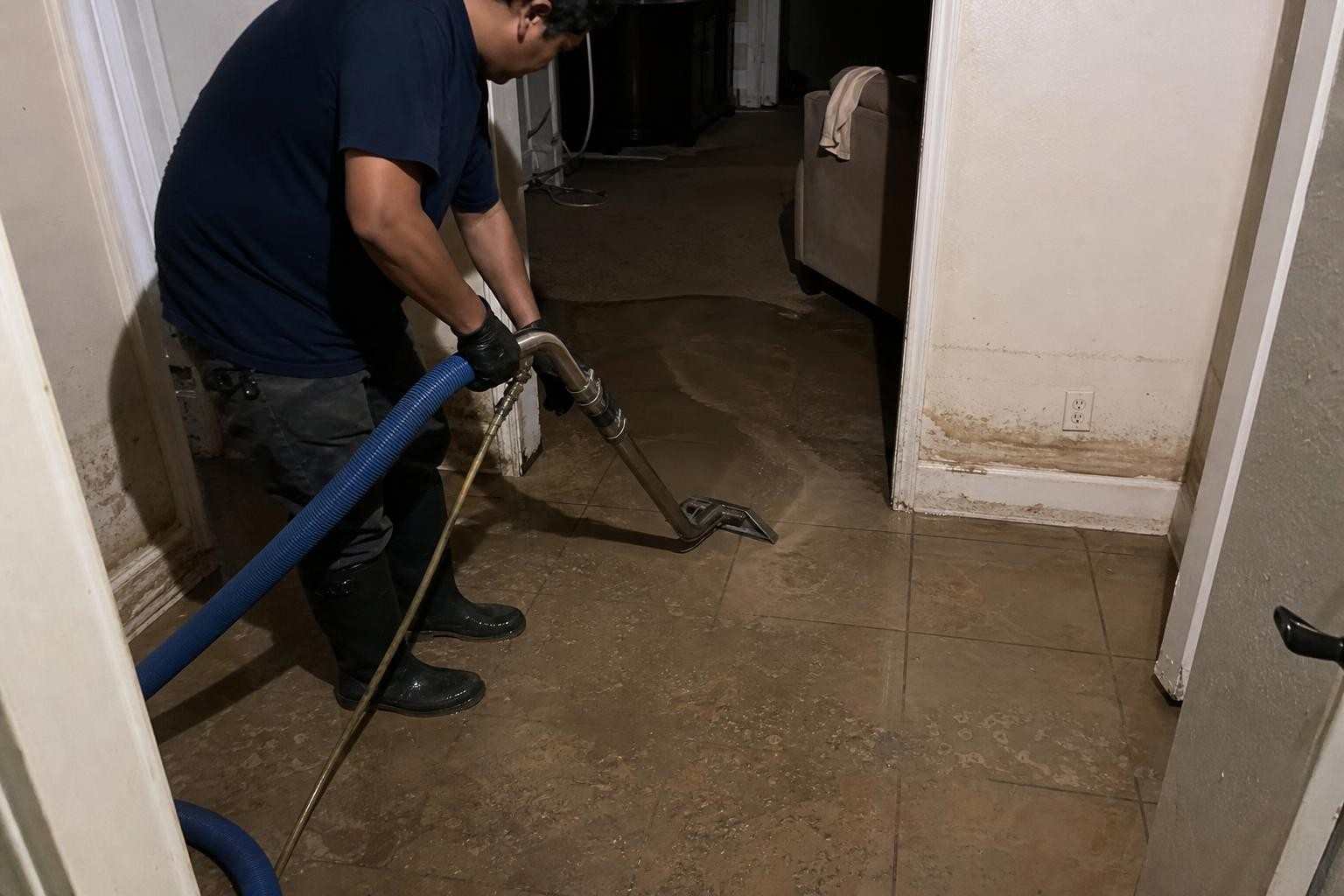
Truck-mounted extractors and submersible pumps empty a flooded Balch Springs home in a fraction of the time any household wet-vac could manage. Some people call this water mitigation or water cleanup, and it is where every Balch Springs water restoration and water damage repair job starts.
Water extraction in Balch Springs TX →24/7 Emergency Water Removal
A line that bursts at 2 AM or a slab leak inching across the kitchen has no interest in business hours. We pick up around the clock and head for Balch Springs. We take 24 hour water damage calls across Balch Springs, and that 24/7 water damage line never goes to voicemail.
Emergency water removal in Balch Springs TX →Flood Damage Restoration
When Hickory Creek rises or the storm drains back up, a flooded home needs full extraction, structural drying, and cleanup. We take Balch Springs flood jobs from soaked to sound. From flood cleanup through the flood damage repair that follows, we carry a flooded Balch Springs home from soaked to sound.
Flood damage restoration in Balch Springs TX →Sewage Cleanup & Sanitization
A backed-up sewer line is a Category 3 biohazard, well past anything a mop can touch. We contain it, haul it out, disinfect the space, and clear the odor across Balch Springs. Our sewage backup cleanup covers full sewage removal and black water cleanup.
Sewage cleanup in Balch Springs TX →Commercial Water Damage
Storefronts and offices along the Elam Road and Lake June Road corridors. We clear the water off your commercial floor and help you keep the doors open.
Commercial water damage in Balch Springs TX →Mold Remediation
Dampness left in a wall hands mold a start within a day or two. Our TDLR-licensed partners run the containment, removal, and HEPA filtration for Balch Springs homes.
Mold remediation in Balch Springs TX →Mold After Water Damage in Balch Springs
The reason we push to reach Balch Springs quickly comes down to the climate. Mold needs three things, warmth, moisture, and a surface to root into, and a Dallas County summer supplies all three. A colony can take hold within a day or two of the leak, usually behind the drywall or under the flooring where nothing looks wrong until the smell shows up. Pulling the standing water is only the first move; stop there without deep drying and you have simply sealed the dampness inside the wall to keep working on the framing.
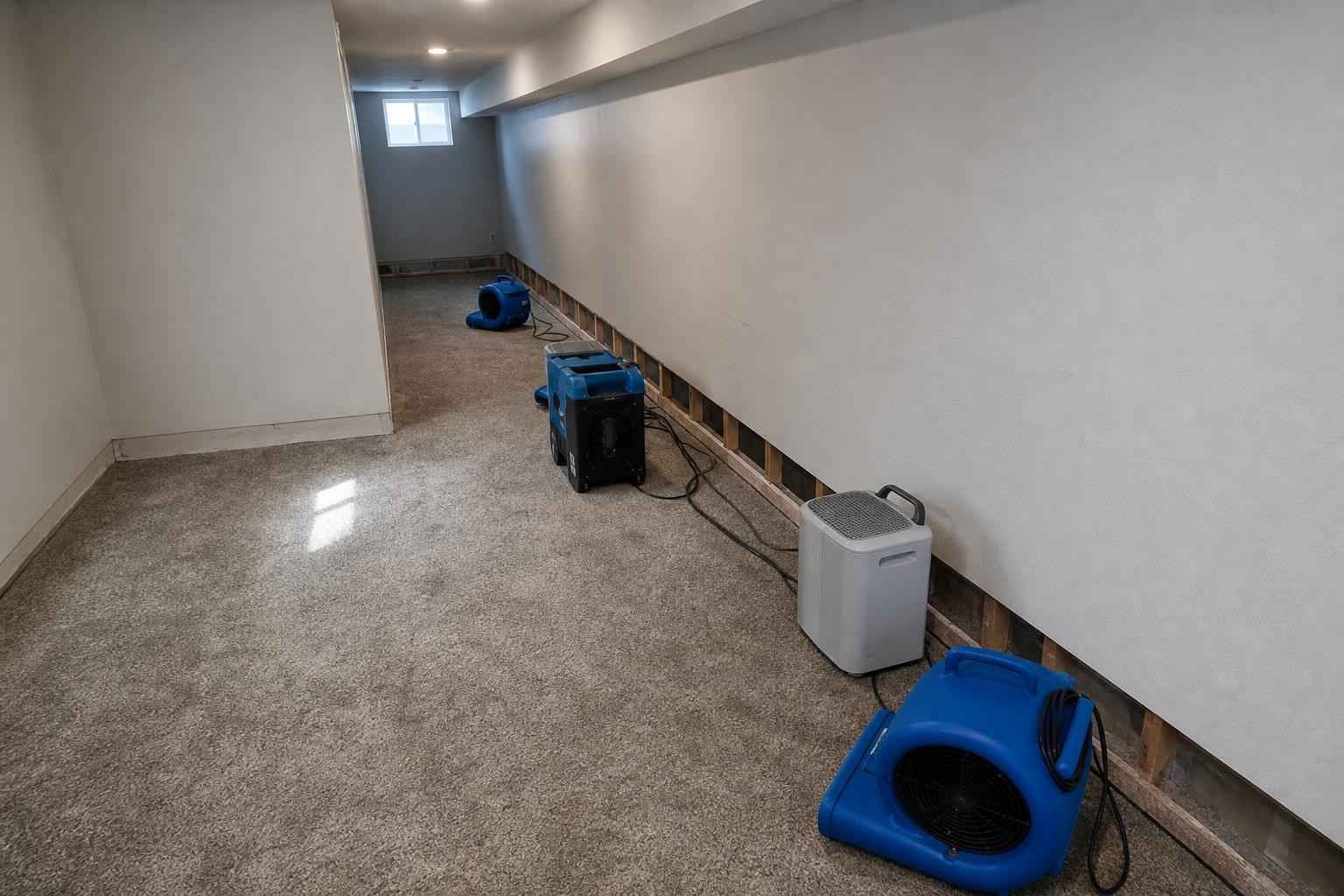
So we treat drying as its own stage, not an afterthought. Air movers and dehumidifiers stay on the structure, then we come back with moisture meters and thermal imaging to confirm the pockets you cannot see have actually reached dry, not just the surface under your palm. Where mold has already taken hold, our mold remediation partners handle the removal and treatment.
Mold remediation and removal services are performed by or in partnership with a TDLR-licensed Mold Remediation Contractor. We do not perform mold testing, inspection, or assessment, remediation and removal only.
Neighborhoods & ZIP Codes We Serve in Balch Springs
We take water damage calls all over Balch Springs TX, from the historic pockets around Five Points and the streets near Hickory Creek to the newer infill off Elam Road and Shepherd Lane, every ZIP code, at any hour.
Balch Springs TX Neighborhoods
Balch Springs TX ZIP Codes
We also serve neighboring Mesquite, Seagoville, Sunnyvale, Garland, and Dallas. View all service areas →
Official Balch Springs TX Resources